Garment & Coat Styles
该模板适用于教师制作教学微课视频
 用户_TP$Saw&9 |
 2026-04-30 08:30:13

视频脚本
Hello everyone,welcome to Fashion English. Our topic today is garment style.
Have you ever struggled to talk about different clothing styles in English? Can you easily name and describe various styles when you see them? Do you worry about misunderstandings when discussing styles with overseas clients? Today, we’ll learn professional English for clothing styles—key technical terms and practical sentences you can use right away. This will help you communicate clearly and confidently in real fashion work.
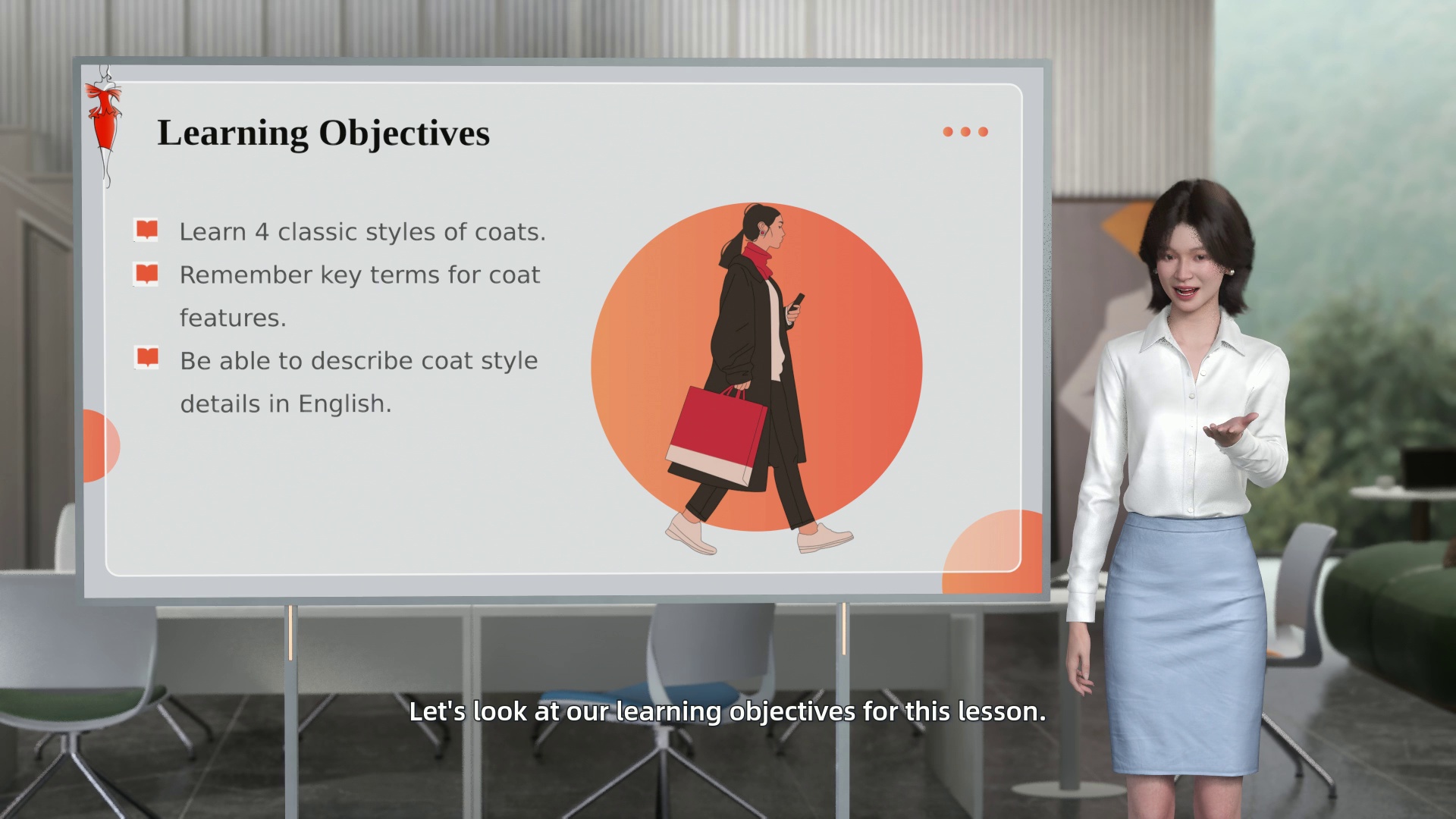
Let’s look at our learning objectives for this lesson. First, we will learn 4 classic styles of coats. Second, we will remember key terms for coat features. Third, we will be able to describe coat style details in English.
One of the most practical and widely used ways to classify clothing is by the part of the body it covers, which divides garments into upper-body clothing and lower-body clothing. Upper-body clothing, as the name suggests, refers to all the pieces we wear from the neck down to the waist, such as coats, jackets, shirts, blouses, sweaters, and vests. These items are not only about keeping us warm or looking stylish—they also form the core vocabulary we use in the fashion and apparel industry. In this section, we will focus on coats—the important upper-body garment, learn 4 of its classic styles, master the key English terms for describing their features, and practice how to describe coat style details accurately in English. All these contents will help you communicate clearly and effectively in your future fashion career.
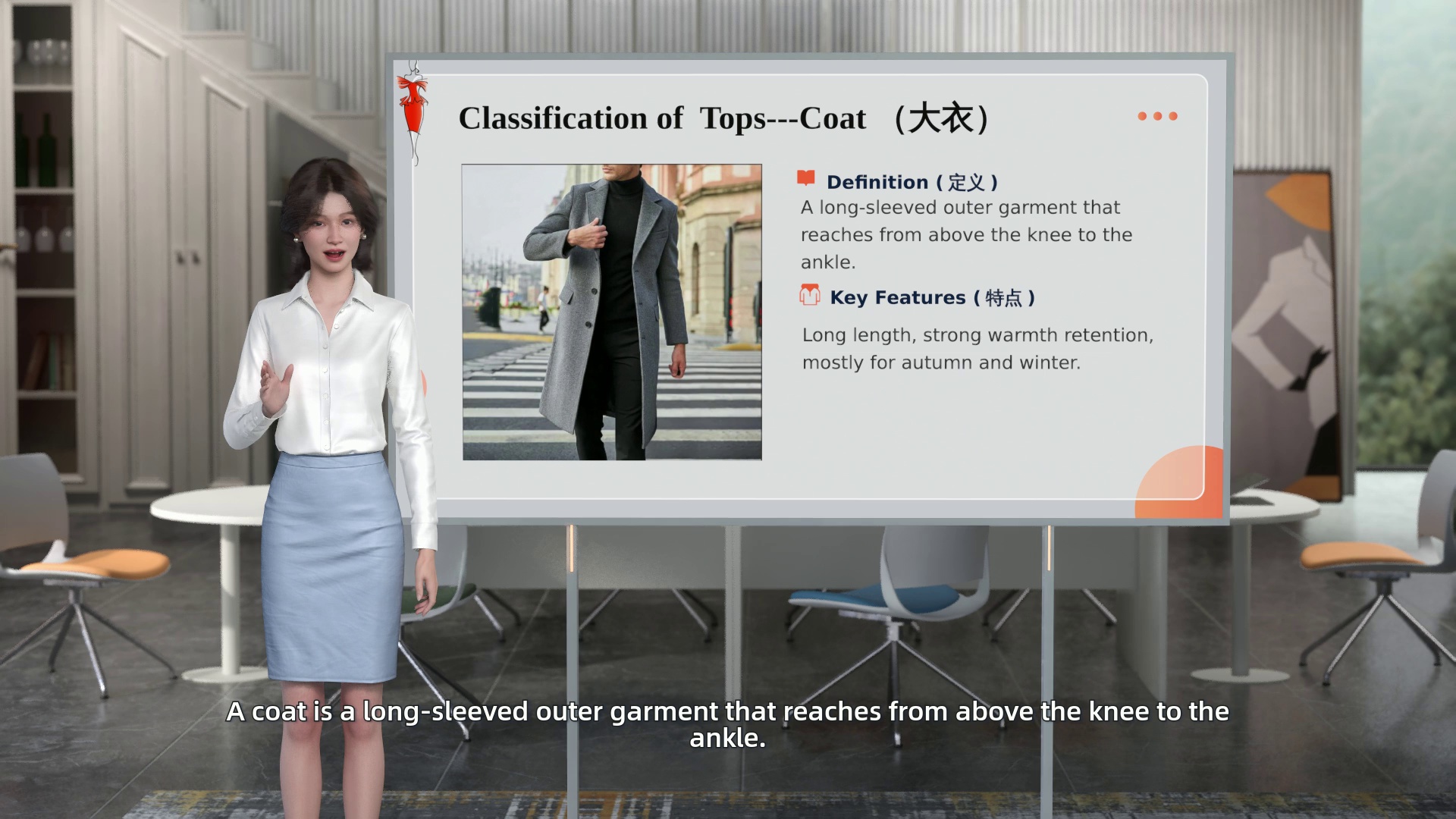
A coat is a long-sleeved outer garment that reaches from above the knee to the ankle. Its key features include long length, strong warmth retention, and it is mostly worn in autumn and winter.
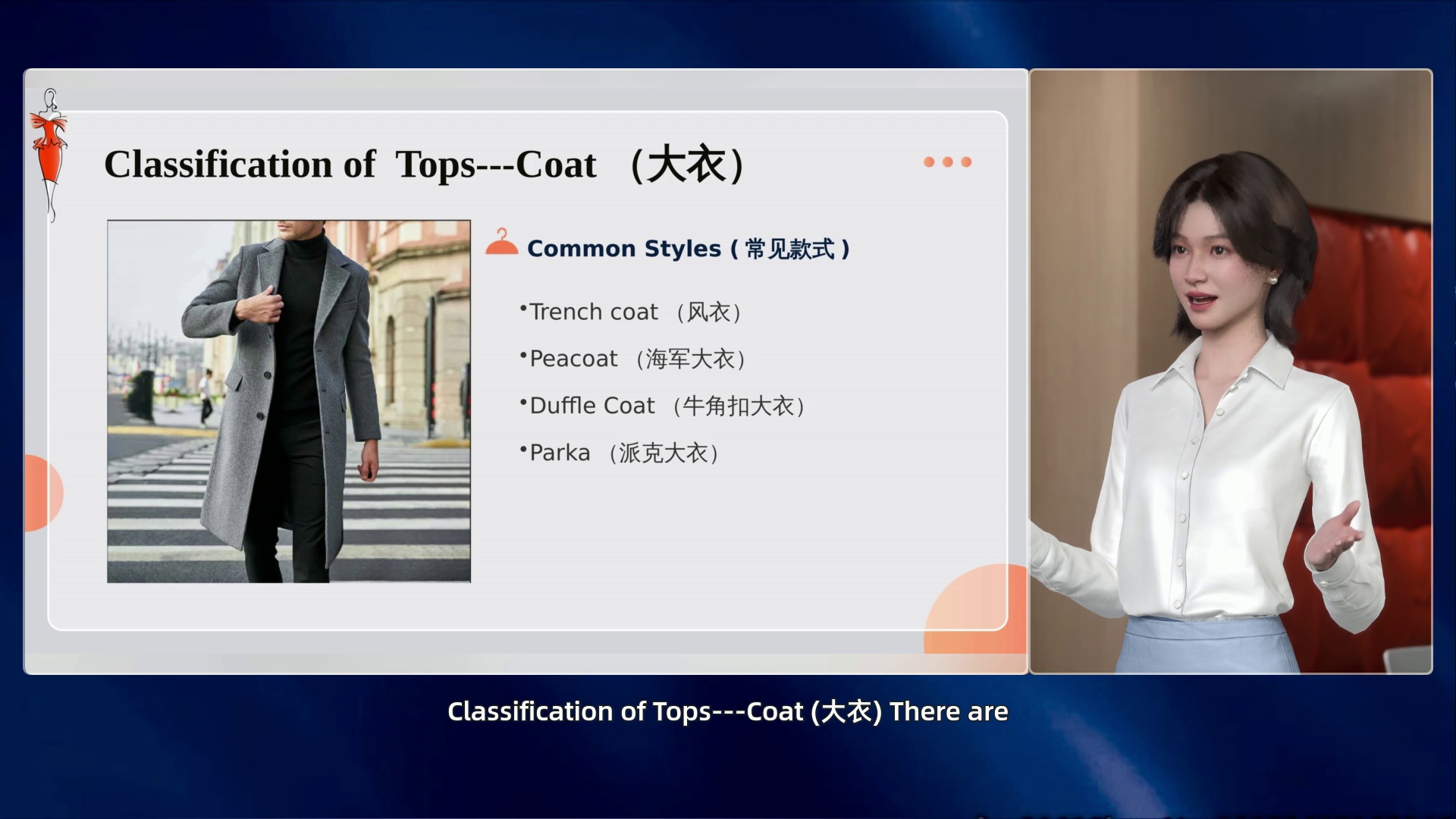
Classification of Tops---Coat (大衣) There are several common styles of coats that you will frequently encounter in the fashion industry. Let’s list them: Trench coat (风衣) Peacoat (海军大衣) Duffle Coat (牛角扣大衣) Parka (派克大衣) We will take a closer look at each of these styles.
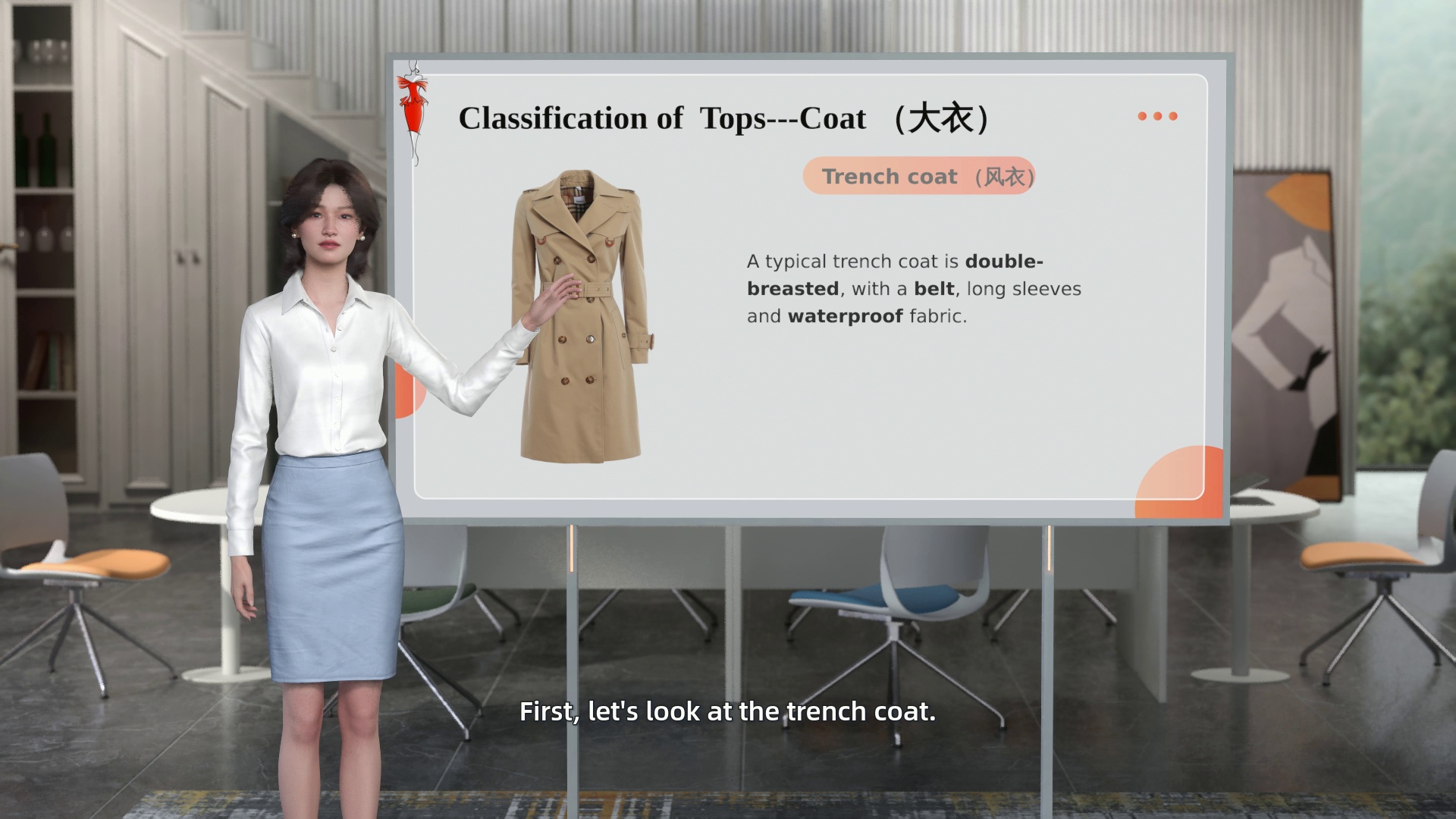
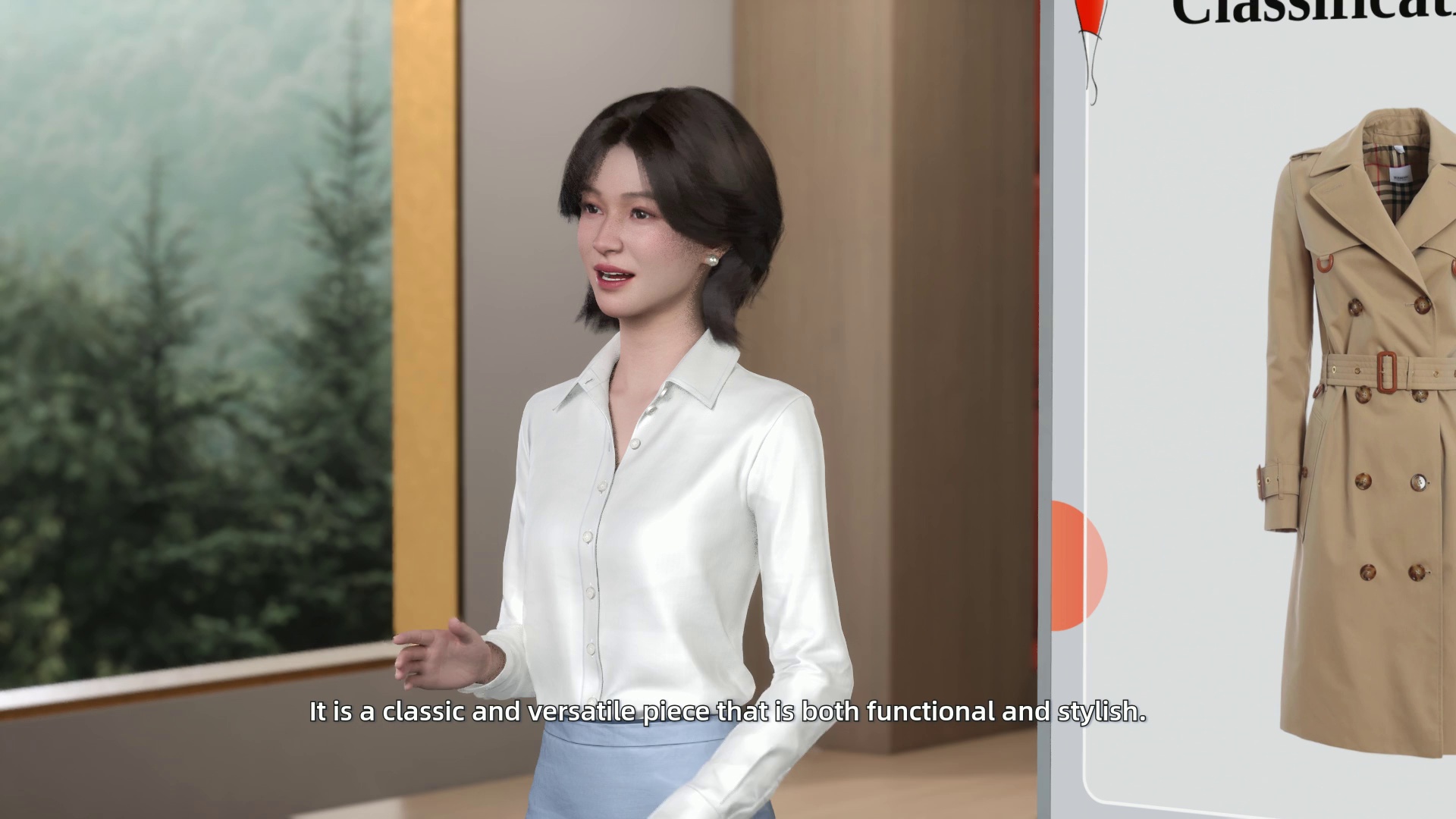
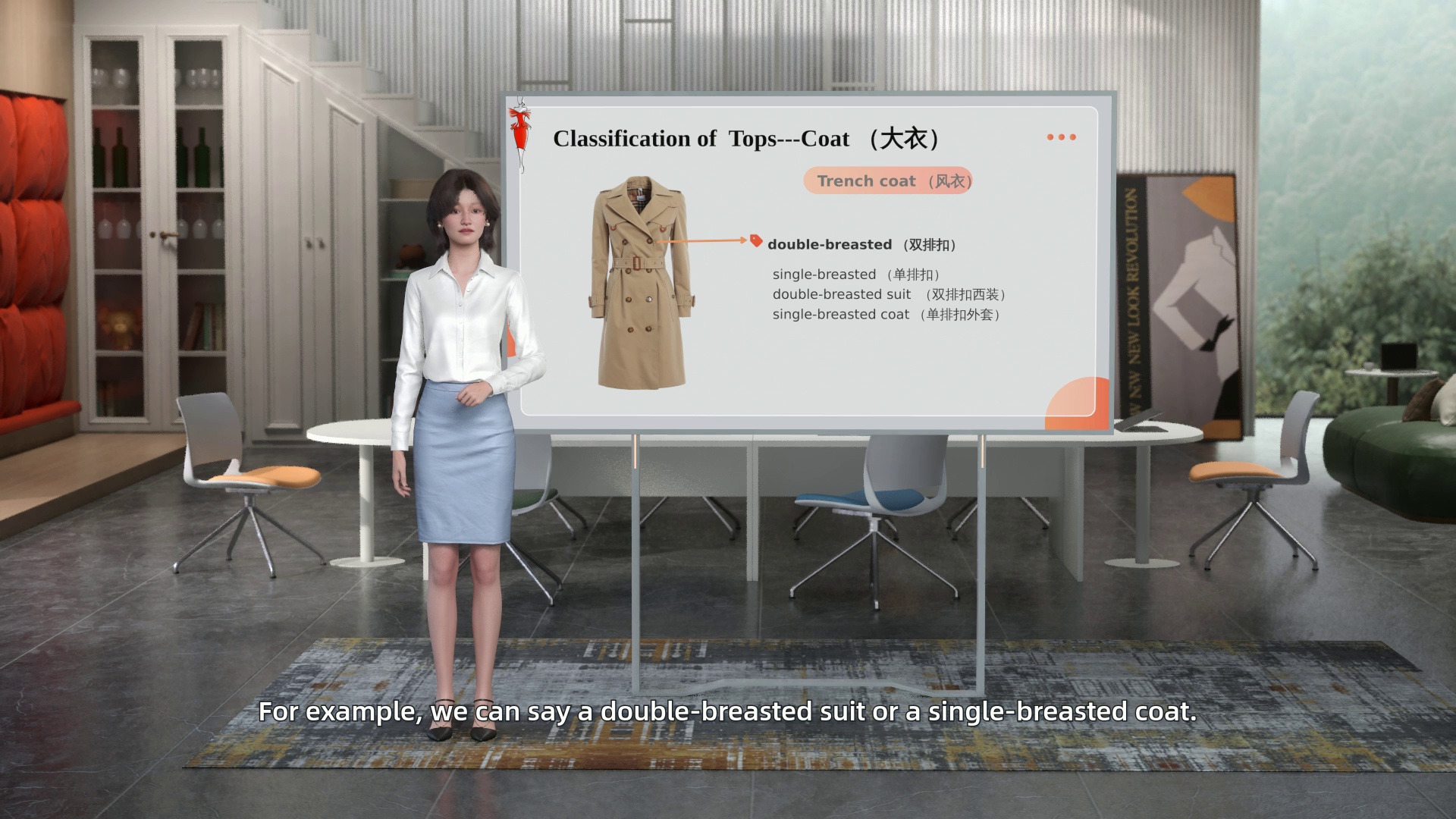
First, let’s look at the trench coat. A typical trench coat is double-breasted, with a belt, long sleeves and waterproof fabric. It is a classic and versatile piece that is both functional and stylish.
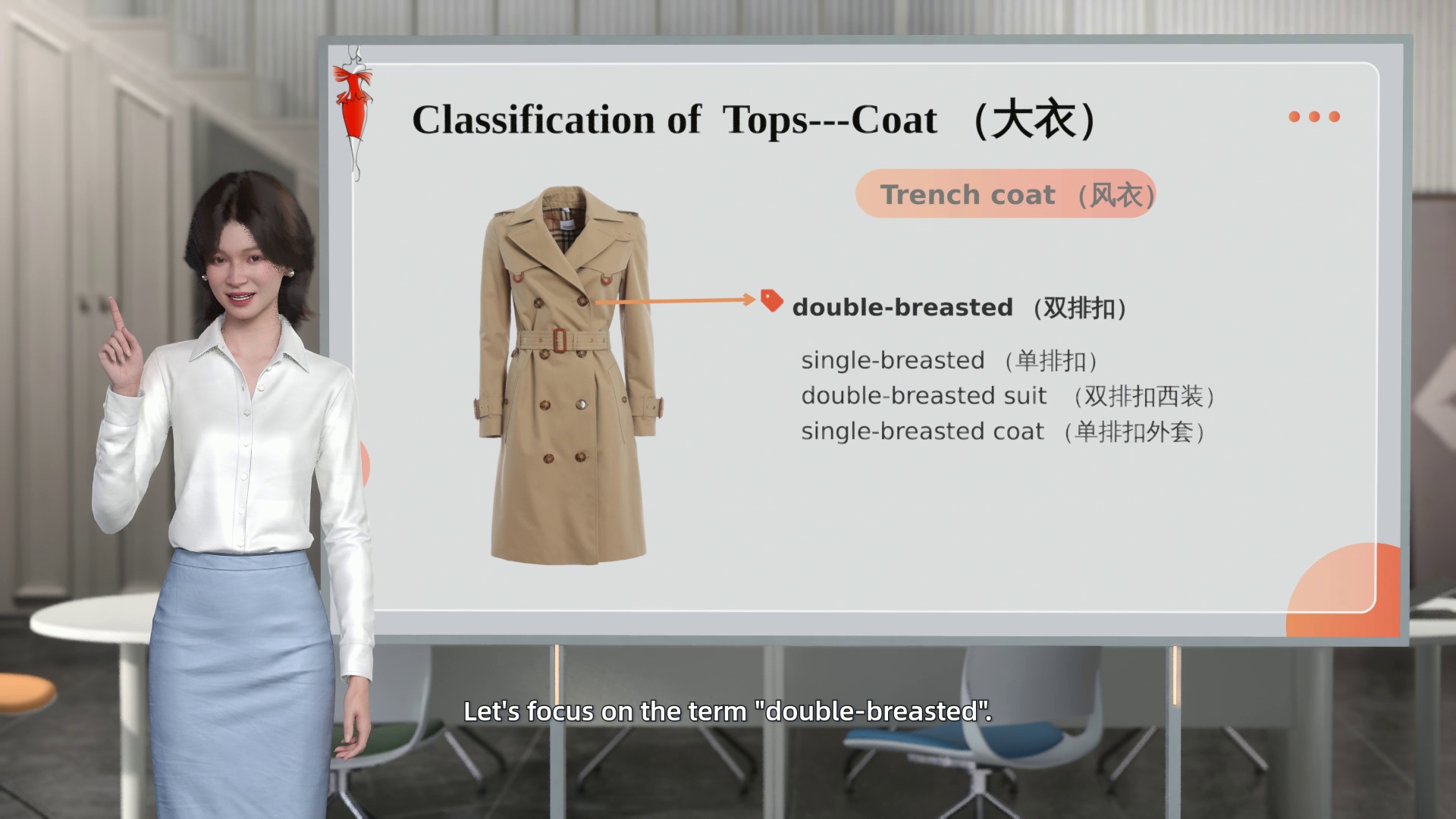
Let’s focus on the term “double-breasted”. Double-breasted means the front of the coat has two rows of buttons. We also have single-breasted, which means one row of buttons. For example, we can say a double-breasted suit or a single-breasted coat.
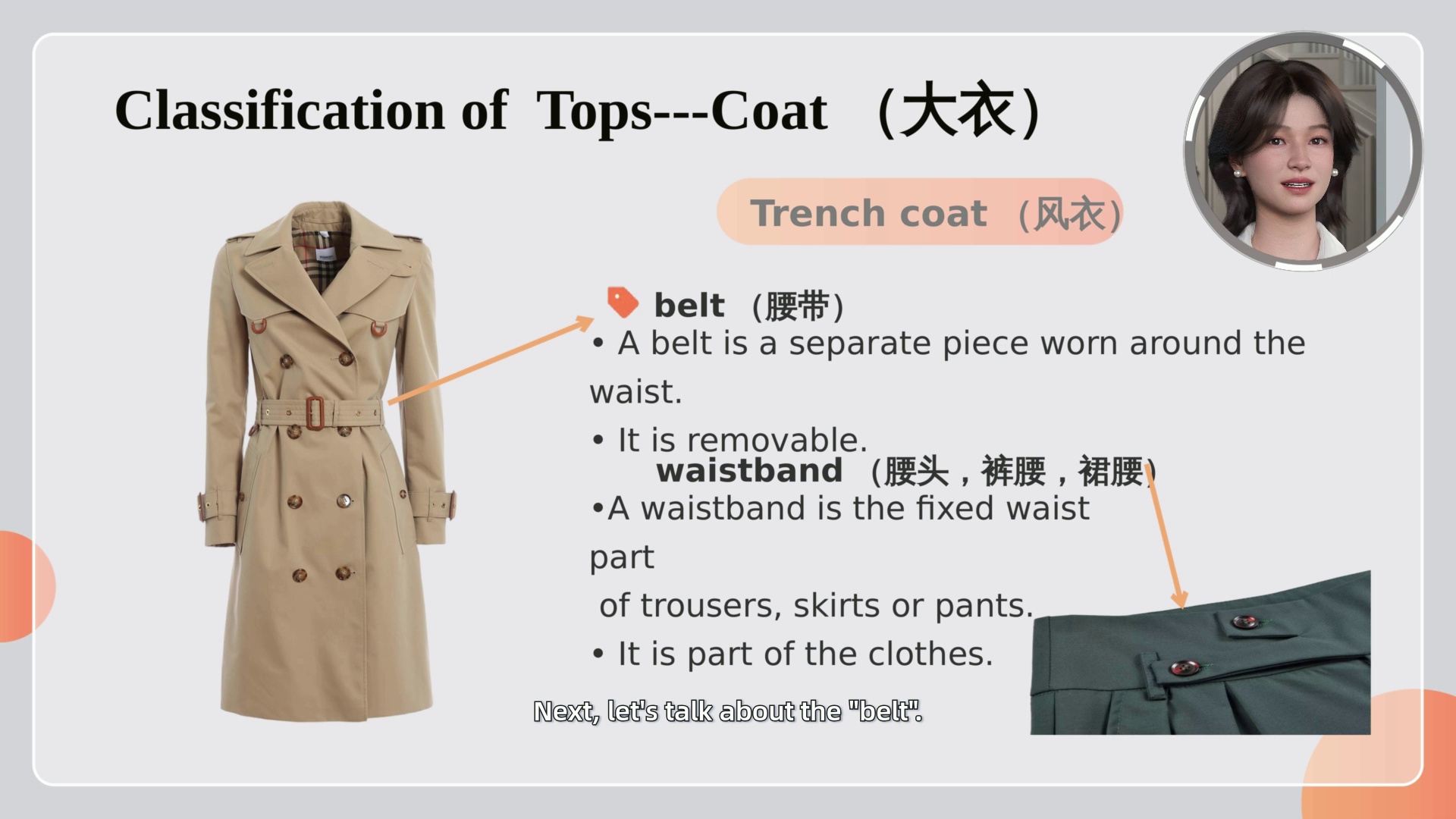
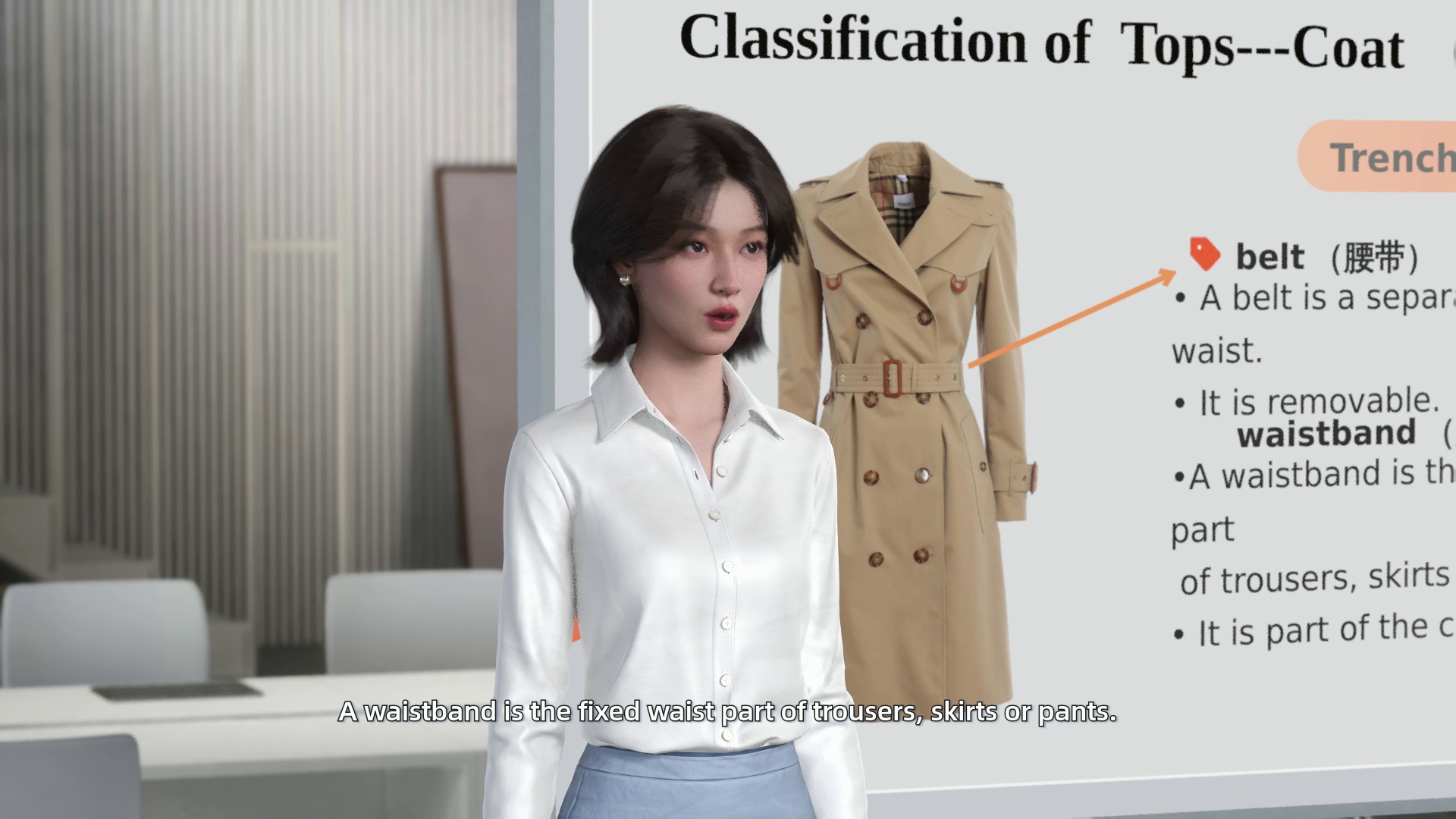
Next, let’s talk about the “belt”. A belt is a separate piece worn around the waist, and it is removable. We should also distinguish it from a “waistband”. A waistband is the fixed waist part of trousers, skirts or pants. It is part of the clothes, not a separate accessory.
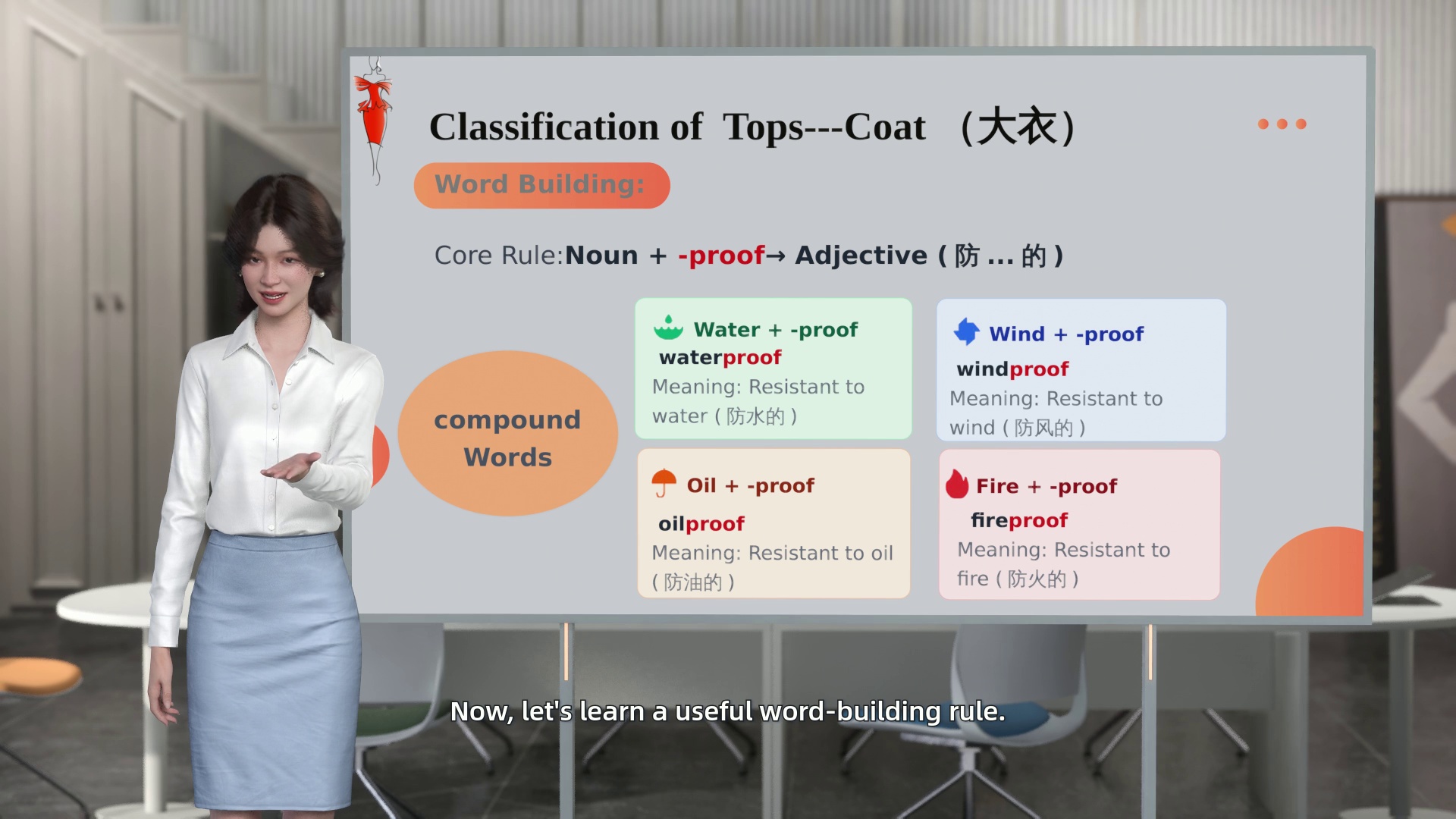
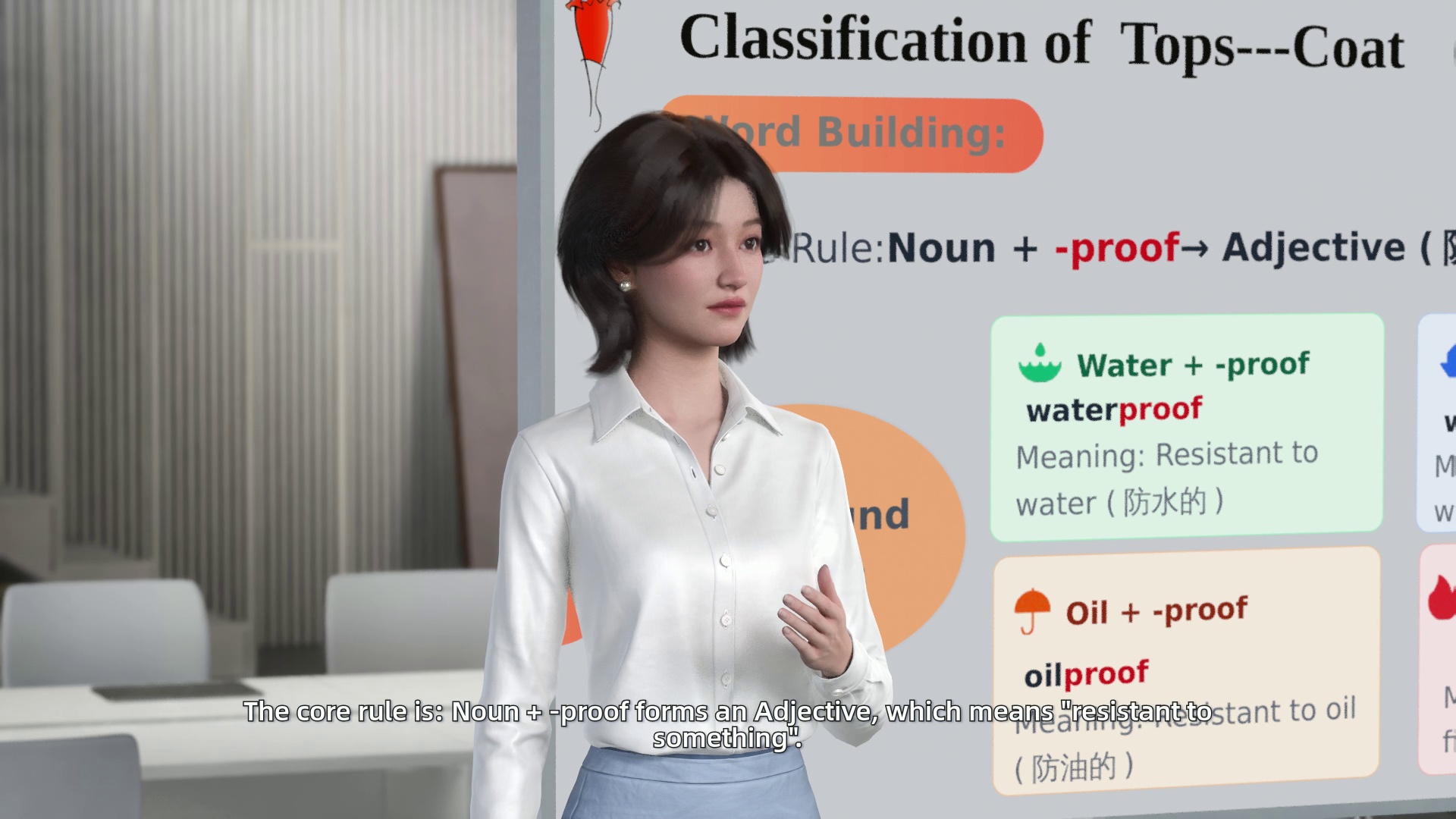
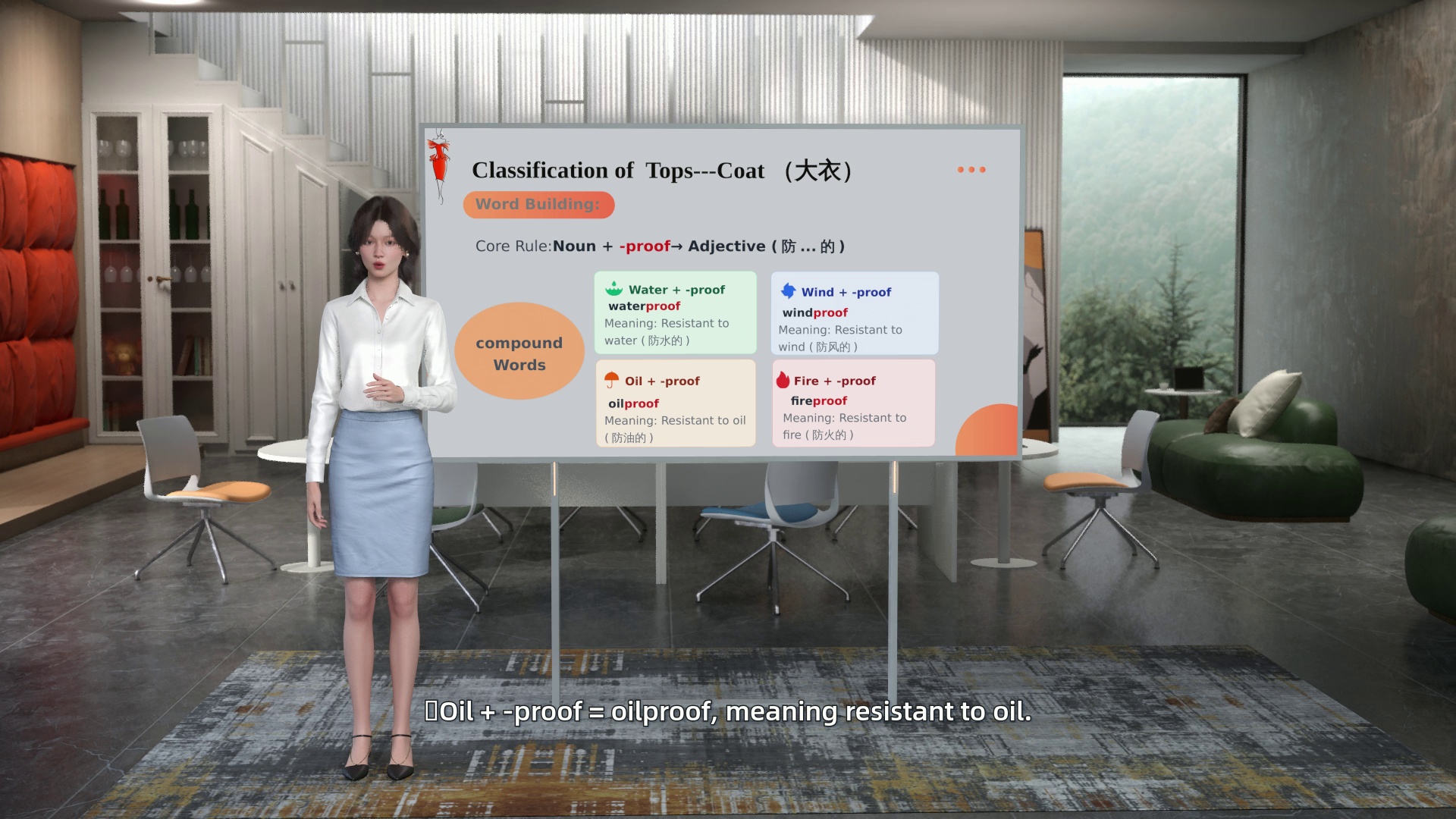
Now, let’s learn a useful word-building rule. The core rule is: Noun + -proof forms an Adjective, which means “resistant to something”. For example: Water + -proof = waterproof, meaning resistant to water. Wind + -proof = windproof, meaning resistant to wind. Oil + -proof = oilproof, meaning resistant to oil. Fire + -proof = fireproof, meaning resistant to fire. This rule helps us understand and remember many technical terms in the fashion industry.
展开