跨境电商课程介绍
该模板适用于学校制作课程介绍视频
 用户_gYrz945l |
2026-10-28 10:35:20




视频脚本
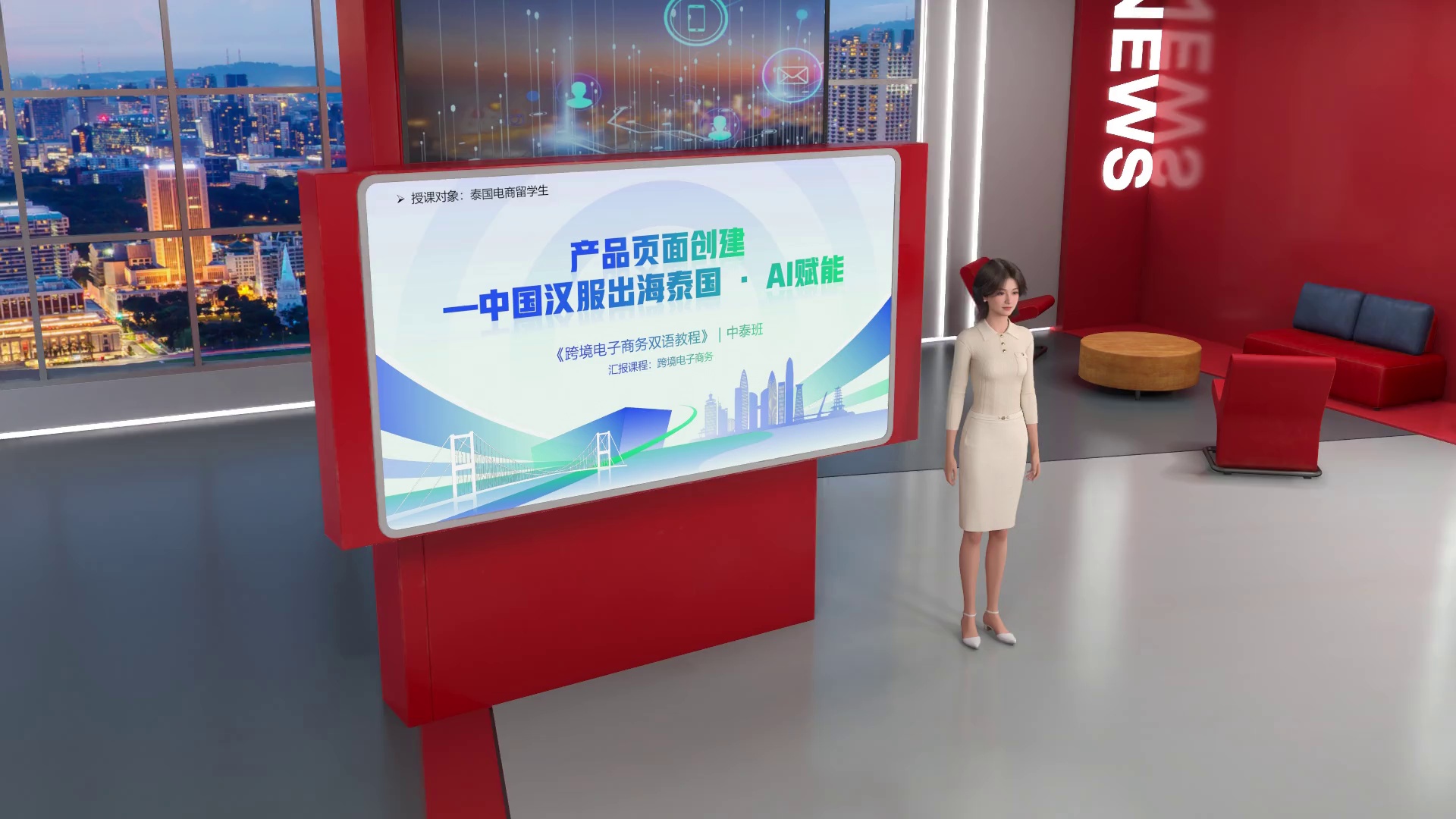
Good morning, distinguished judges. I'm presenting a teaching case from our China–Thailand Class — the course Cross-border E-commerce, Task four: Product Page Creation. Our students are Thai e-commerce learners. Under RCEP and the Digital Silk Road, this course bridges Thai products with the Chinese market.
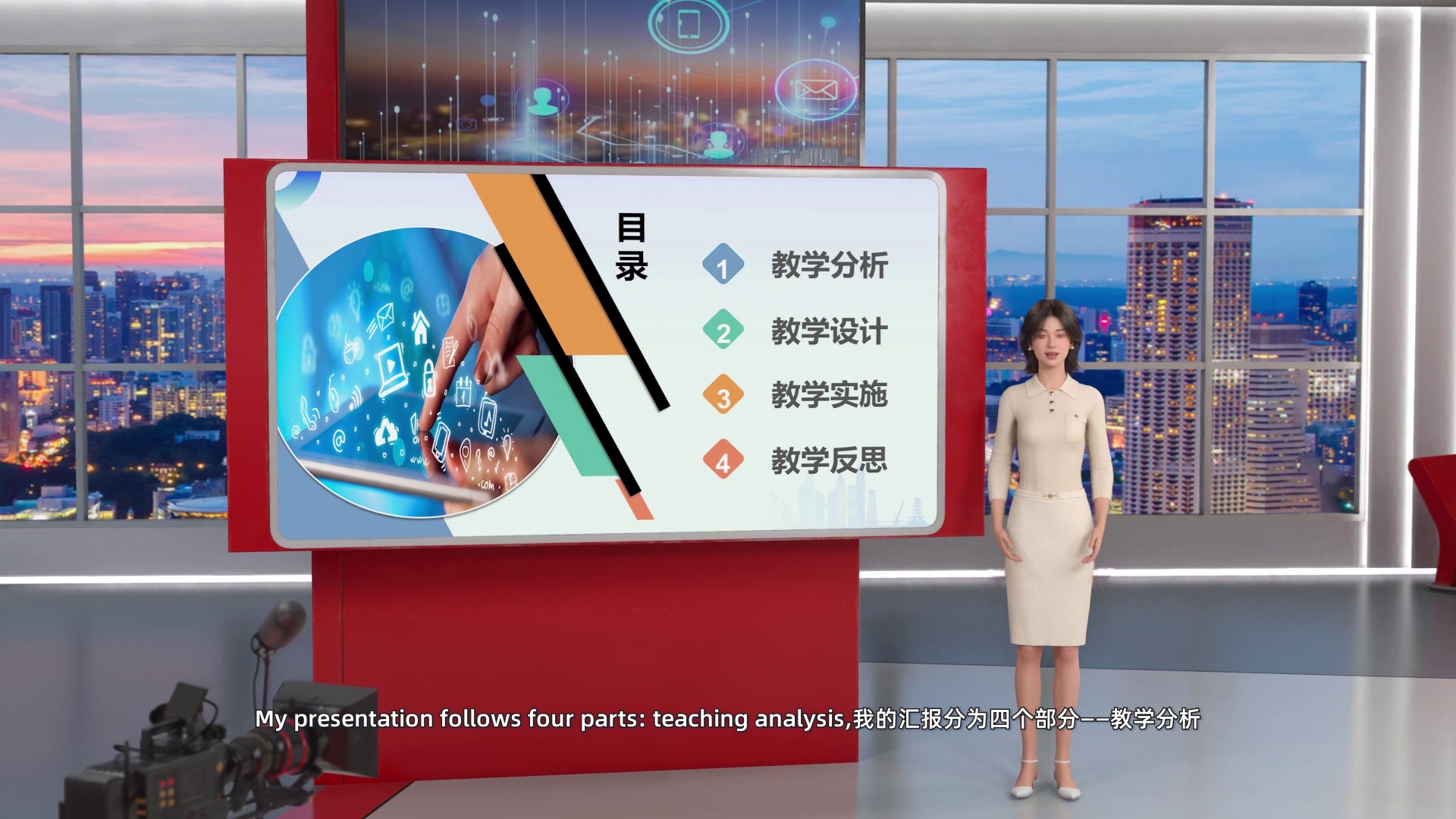
My presentation follows four parts: teaching analysis, teaching design, teaching implementation, and teaching reflection.
Let's begin with Part One: teaching analysis.
This is a foundational course for the China–Thailand e-commerce program — sixty class hours, project-driven and theory-practice integrated. It follows a "double" model: double-teacher teaching by Chinese–Thai instructors plus enterprise mentors; double-source learning from online and offline resources; and double-real training with real data and real environments. Ideological education, AI technology, and industry certificates are all embedded.
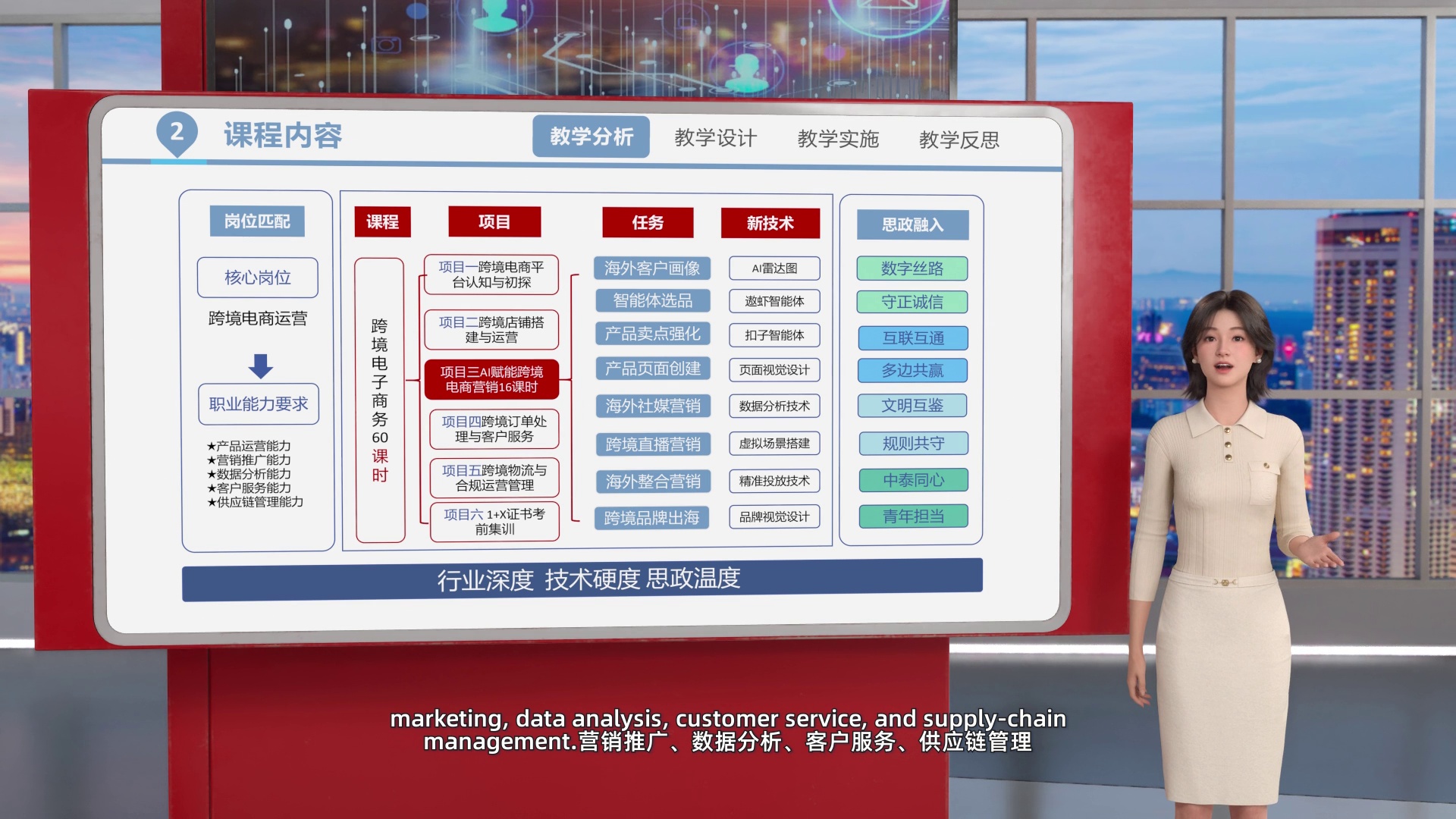
Content aligns with real cross-border jobs — product operation, marketing, data analysis, customer service, and supply-chain management. The course has six projects. Project Three, AI-empowered cross-border marketing, runs sixteen hours and includes Task Eight: Product Page Creation, plus customer profiling and AI-agent product selection. We apply new tools like AI agents and precision advertising, while embedding values such as the Digital Silk Road and China–Thailand solidarity.
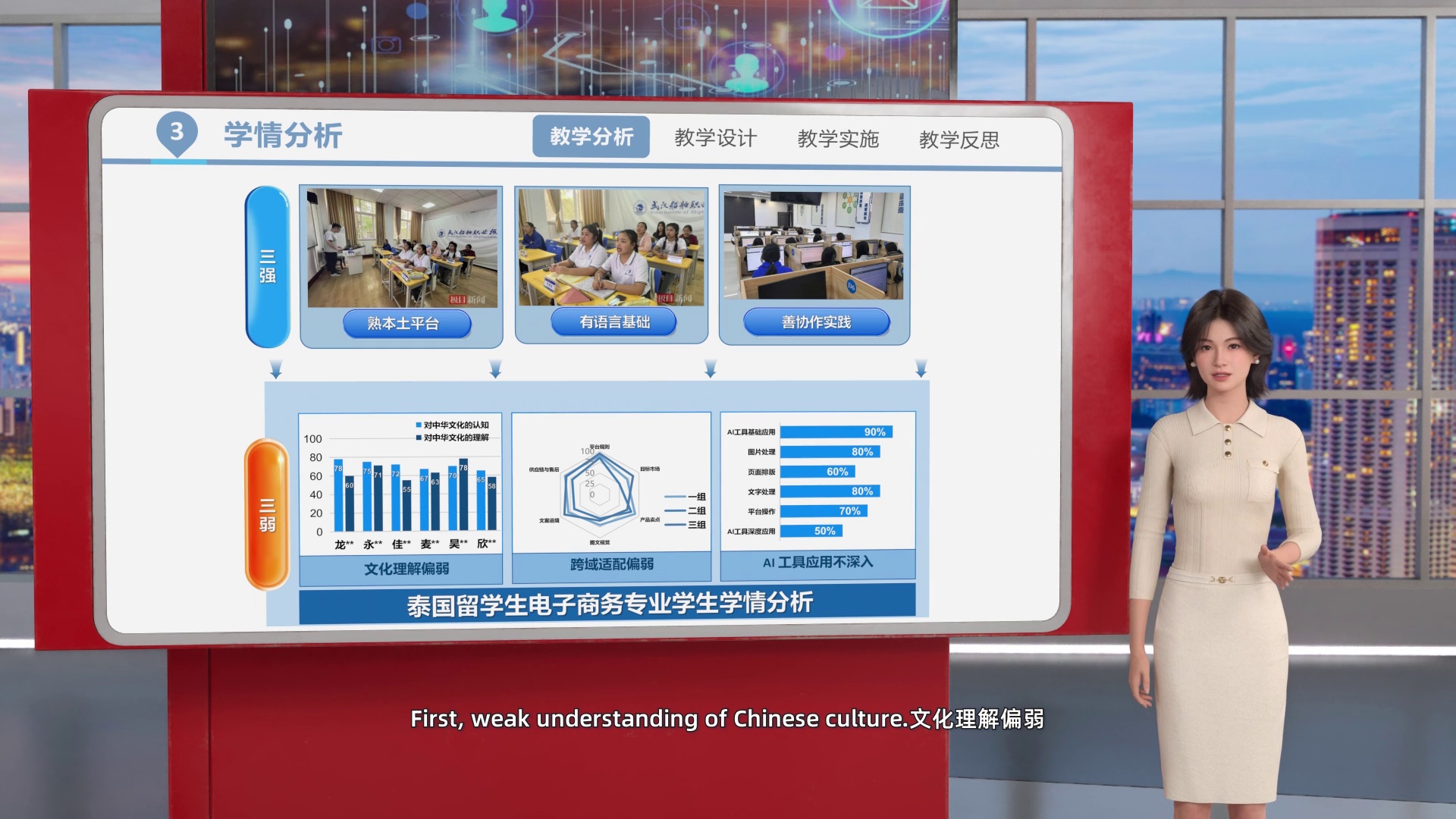
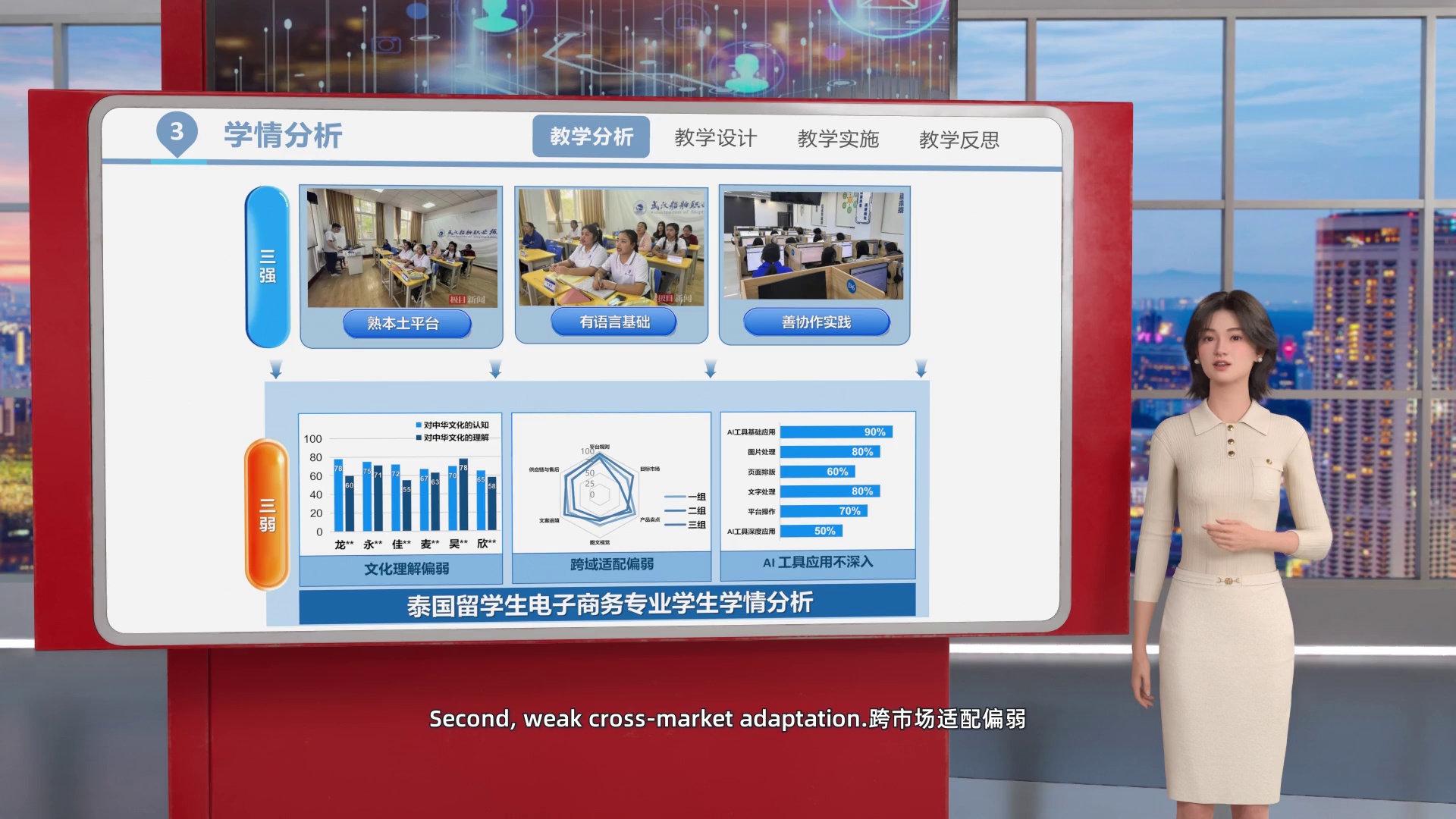
Our learner analysis reveals three gaps. First, weak understanding of Chinese culture. Second, weak cross-market adaptation. Third, shallow use of AI tools. Charts show student groups scoring lower on cultural context and platform rules. This is exactly why we must strengthen cultural elements and AI practice in our design.
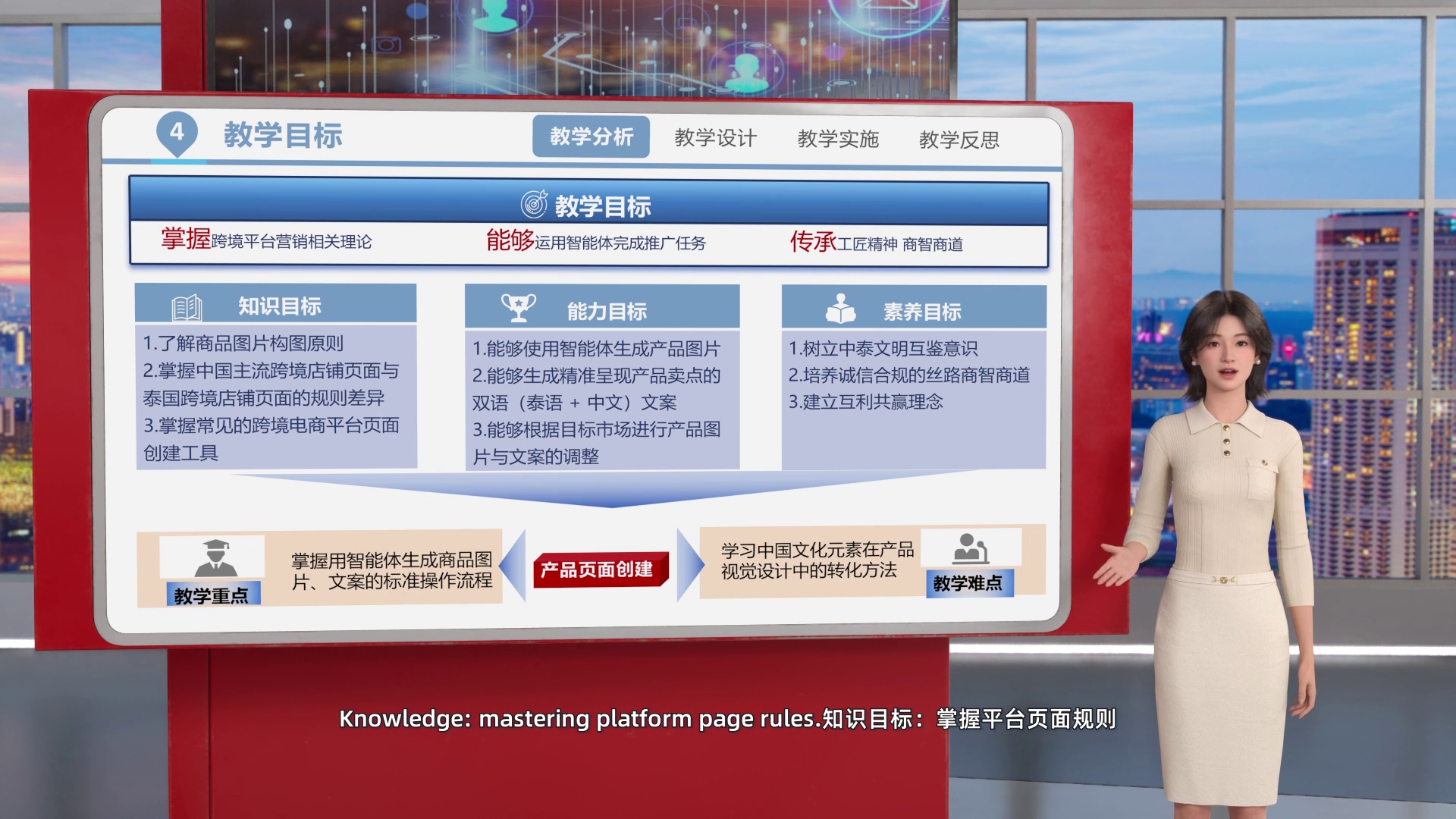
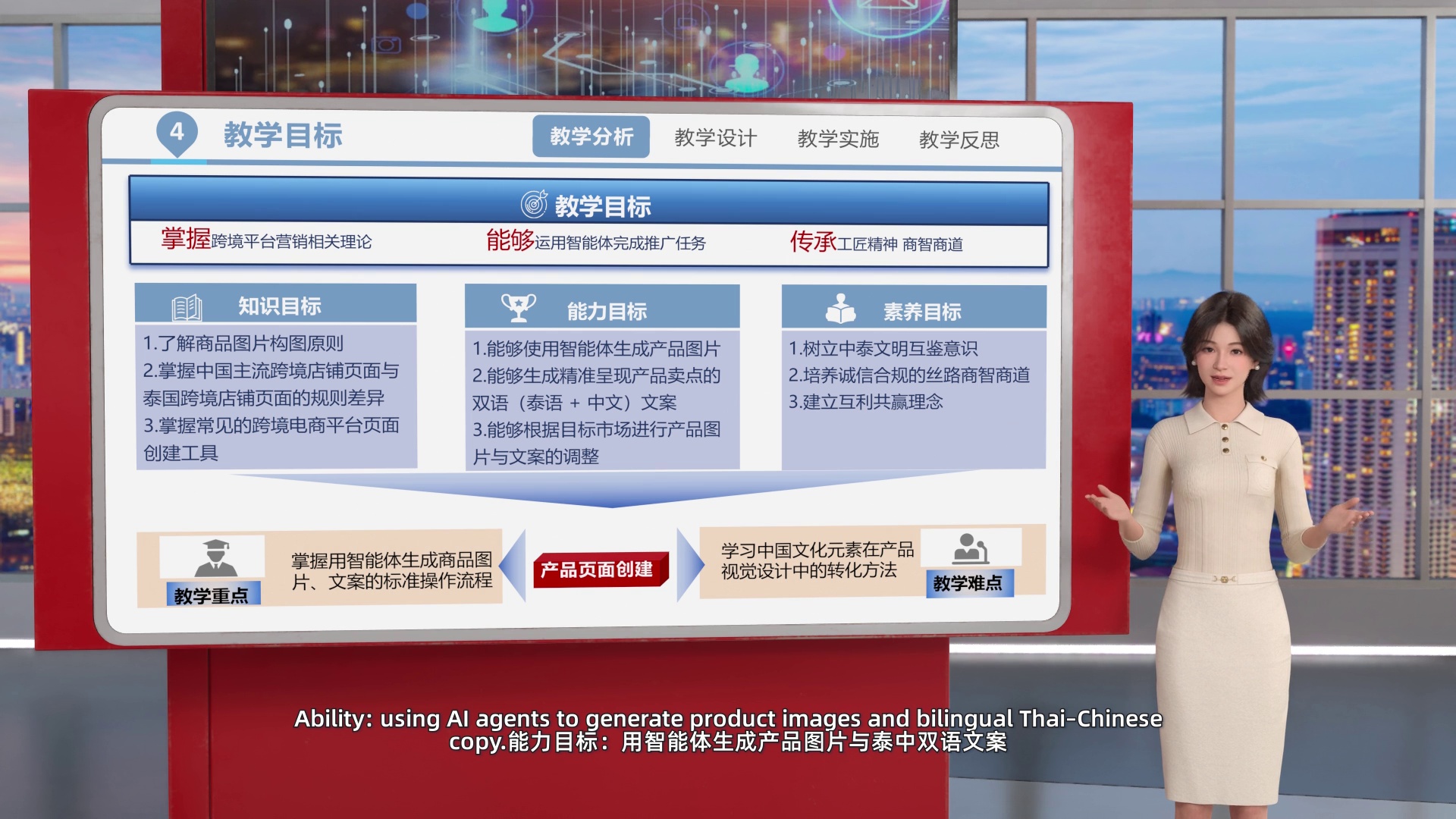
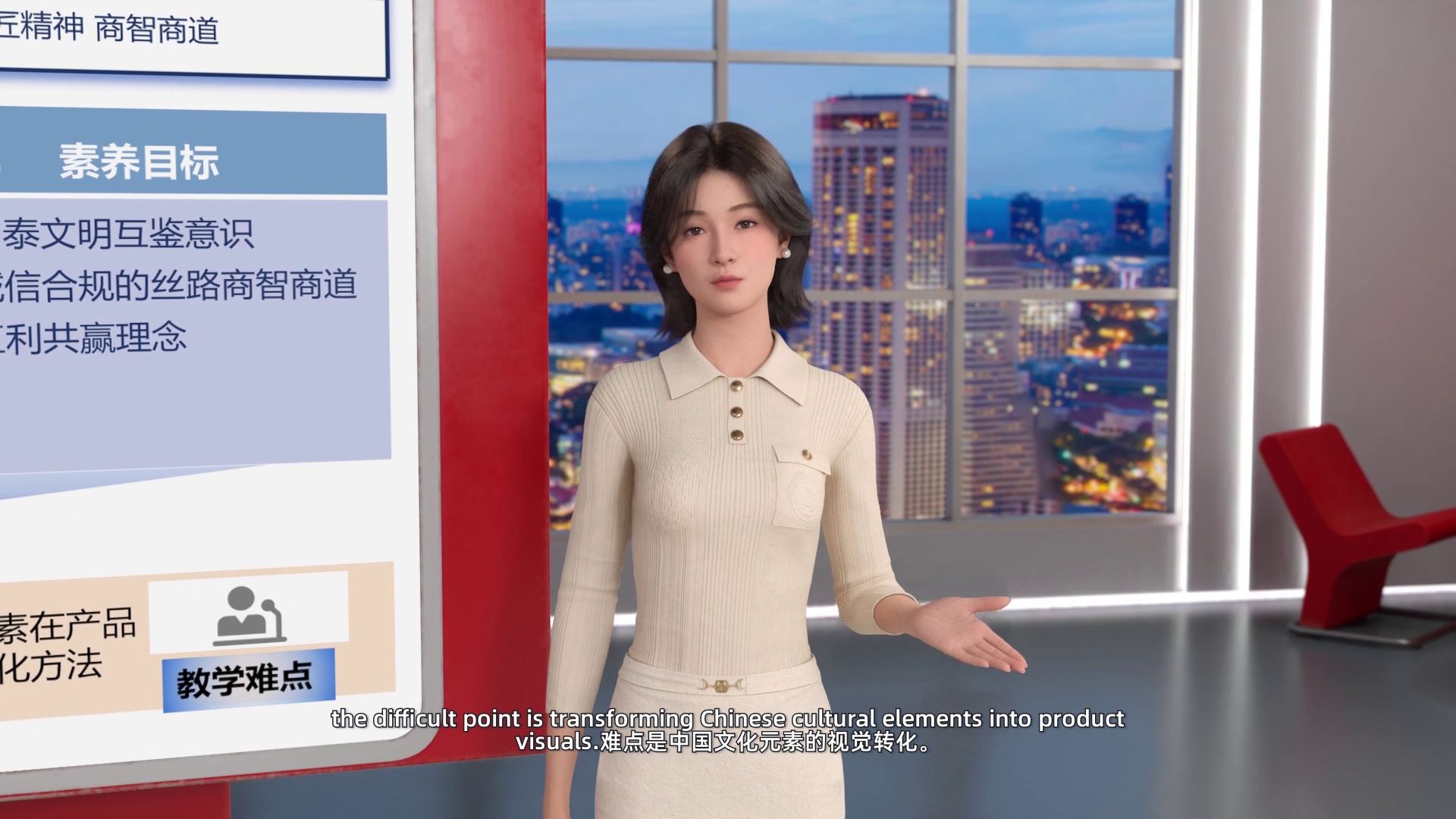
Therefore we set three-dimensional objectives. Knowledge: mastering platform page rules. Ability: using AI agents to generate product images and bilingual Thai–Chinese copy. Competence: building mutual learning between civilizations with integrity and win-win values. The key point is the standard workflow of generating images and copy with AI agents; the difficult point is transforming Chinese cultural elements into product visuals.
Part Two: teaching design.
We use task-driven and case-driven strategies with group collaboration — design teams and copywriting teams. Real product themes include cultural gifts, educational supplies, traditional costumes, and Hubei local flavors. Students learn by doing, solving authentic cross-border problems.
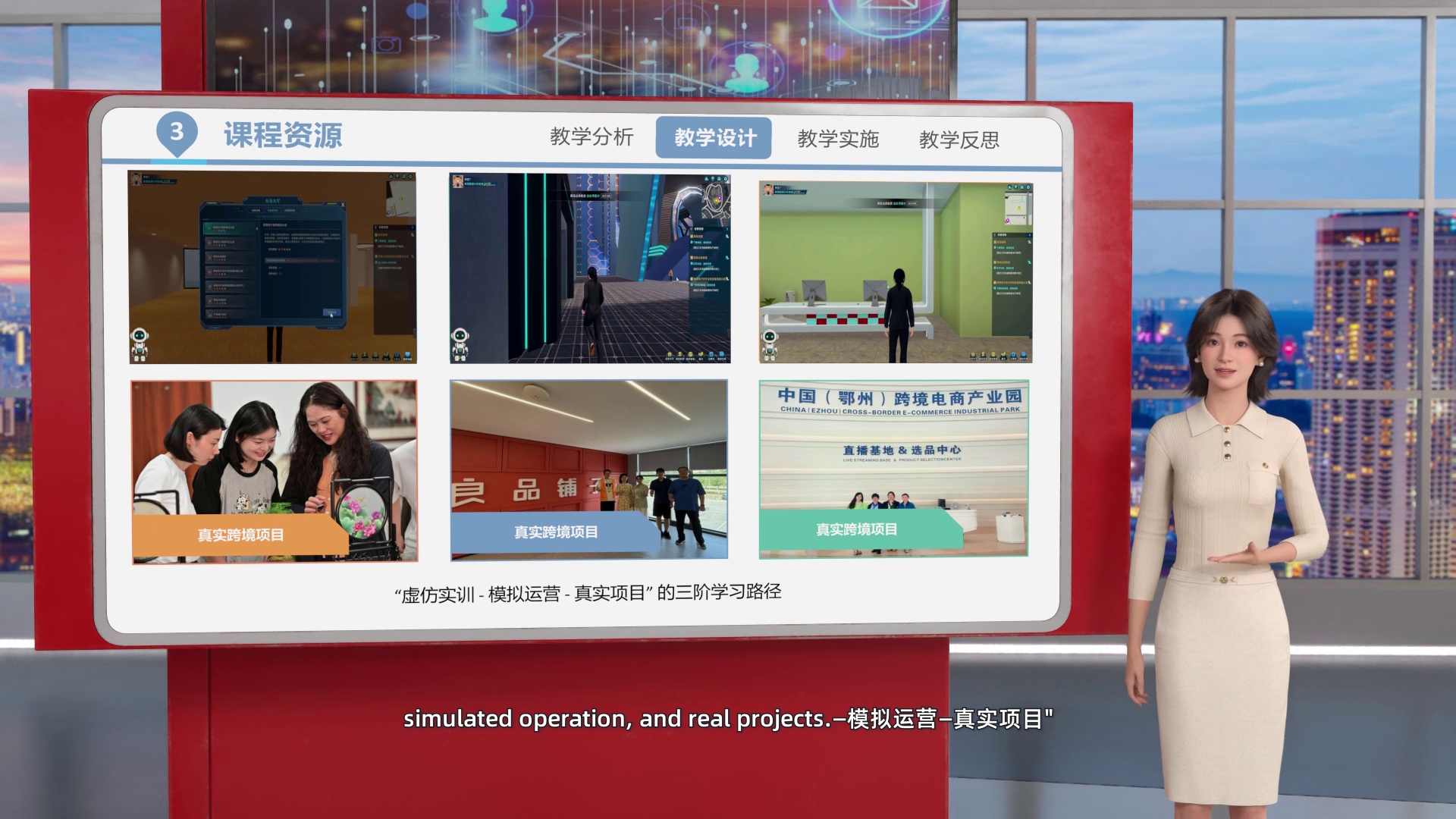
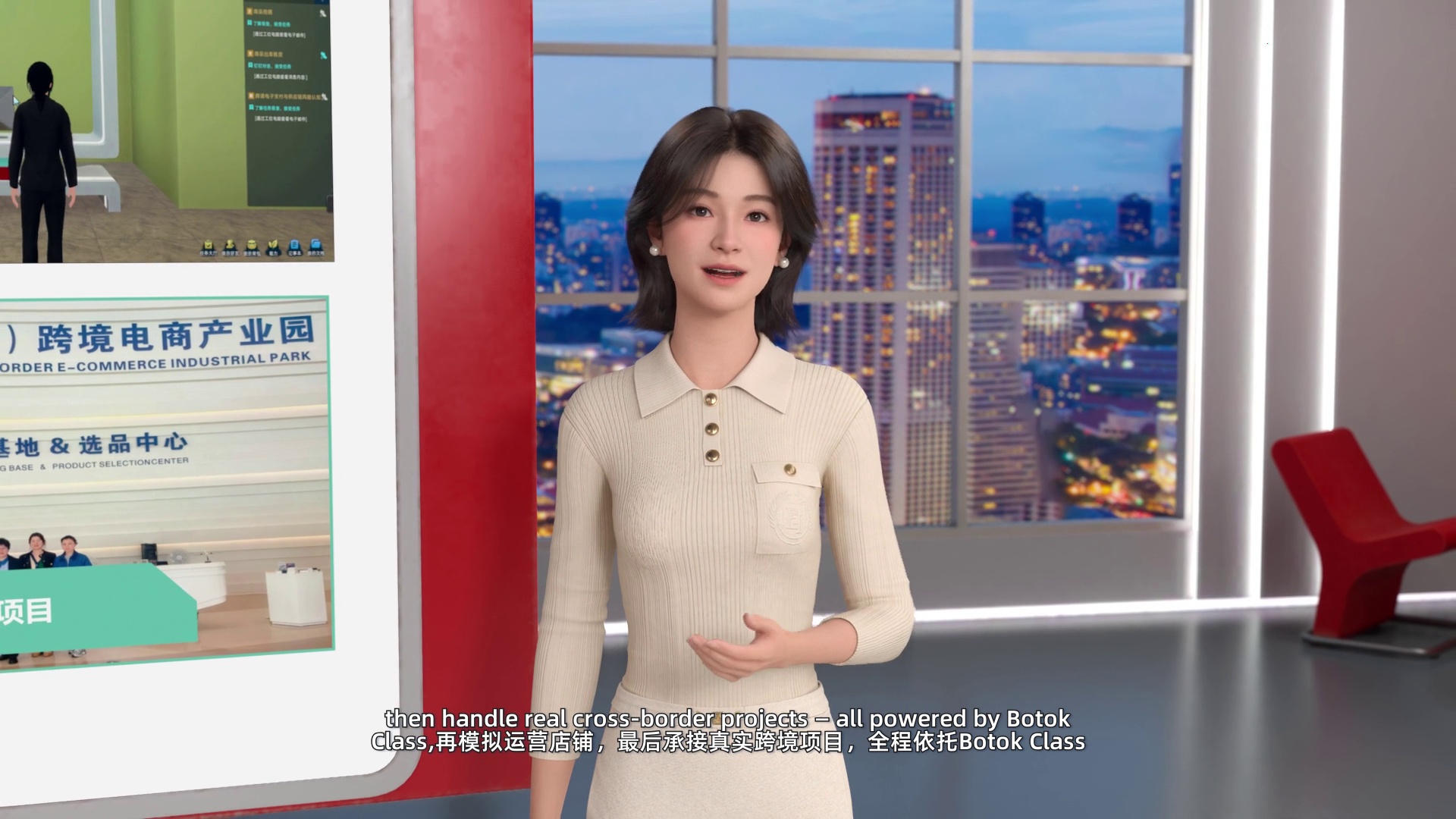
Our resource design follows a three-stage learning path: virtual simulation training, simulated operation, and real projects. Students practice on a virtual platform, run simulated stores, then handle real cross-border projects — all powered by Botok Class, our international smart education platform, combining digital tools with authentic industry tasks.
Part Three: teaching implementation.
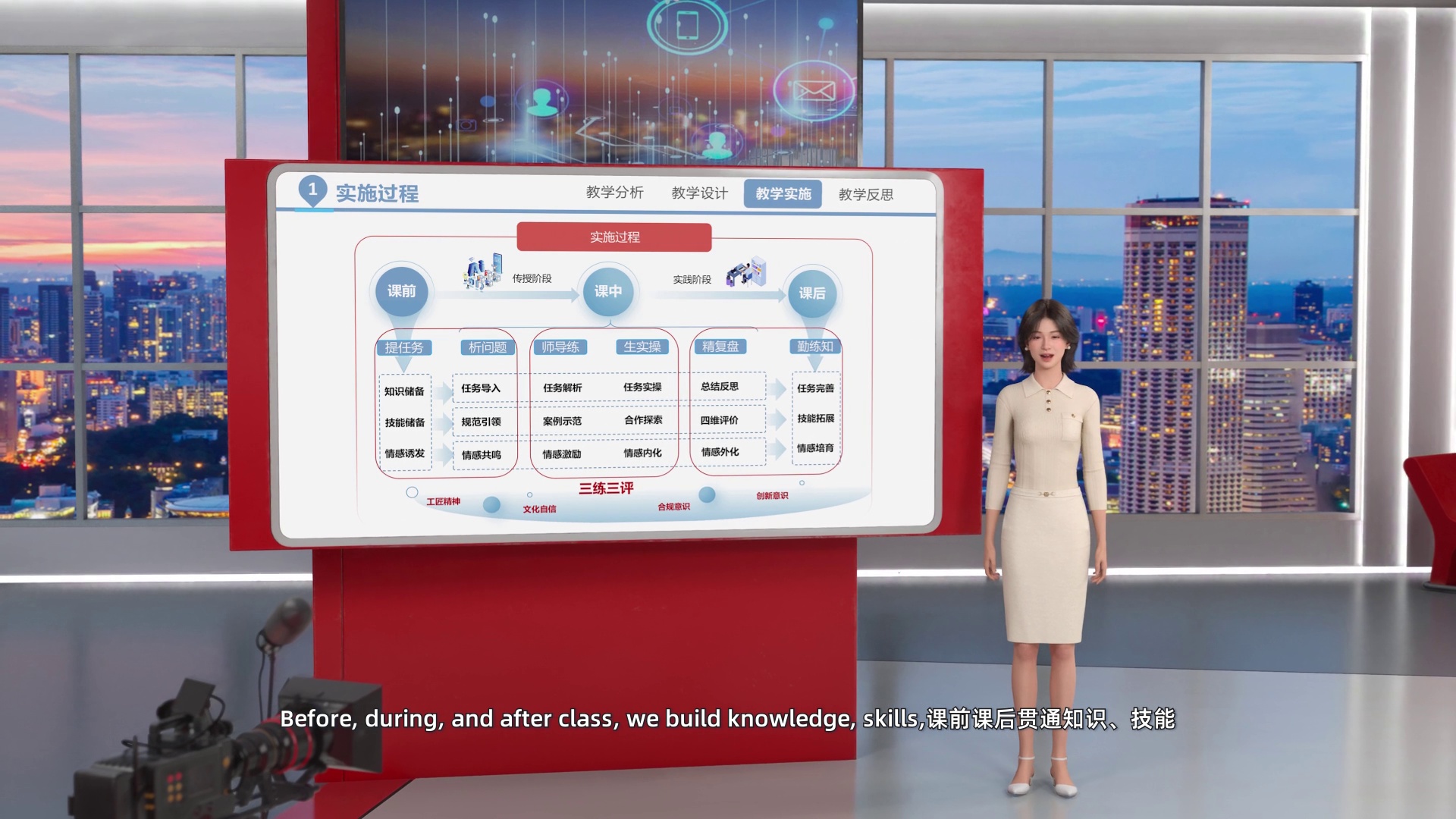
Implementation follows a six-step cycle: assign task, analyze problem, teacher-guided practice, hands-on operation, careful review, and iterative improvement — with three rounds of practice and evaluation. Before, during, and after class, we build knowledge, skills, and emotion: craftsmanship, cultural confidence, compliance awareness, and innovation. This is our "three practices, three evaluations" model.
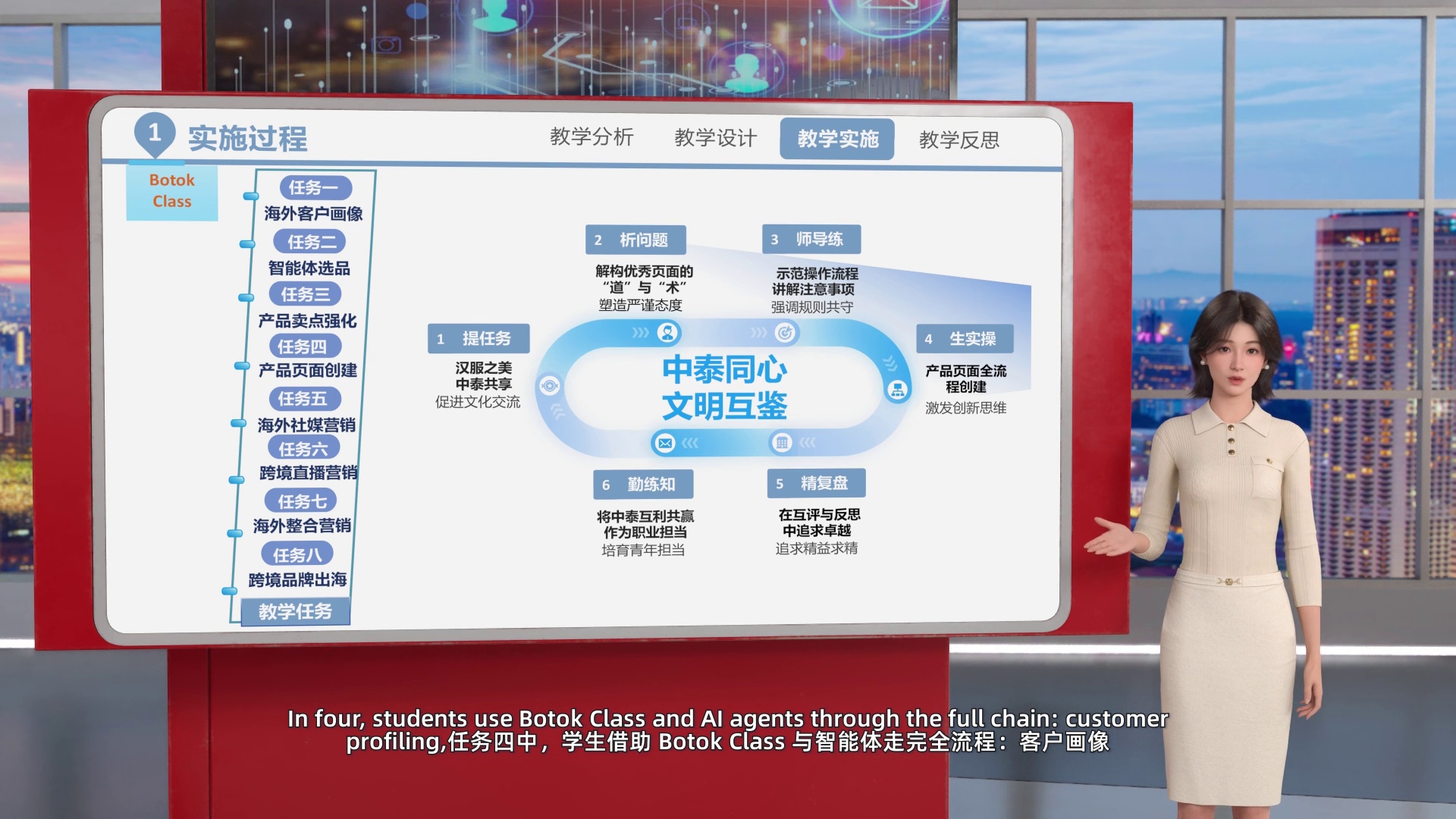
In four, students use Botok Class and AI agents through the full chain: customer profiling, product selection, selling-point refinement, page creation, social media marketing, and live-streaming. The teacher demonstrates, then students practice. The Hanfu design task lets students share Chinese beauty with Thailand, fostering youth responsibility and China–Thailand solidarity.
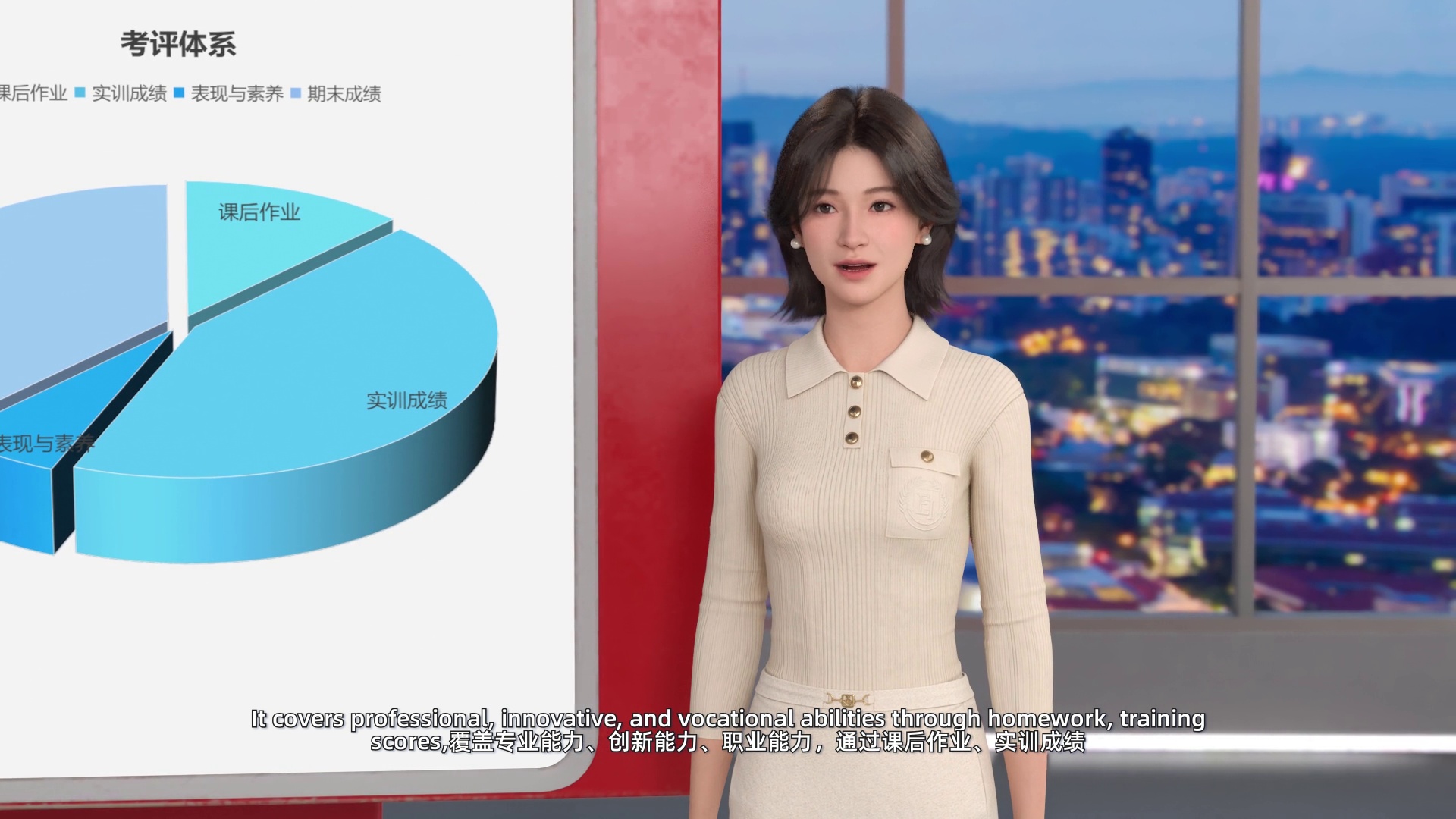
Evaluation is four-dimensional and multi-level, integrating new technologies, new standards, and new requirements. It covers professional, innovative, and vocational abilities through homework, training scores, performance and professionalism, and final assessment — a competency-based, all-around system.
Part Four: teaching reflection.
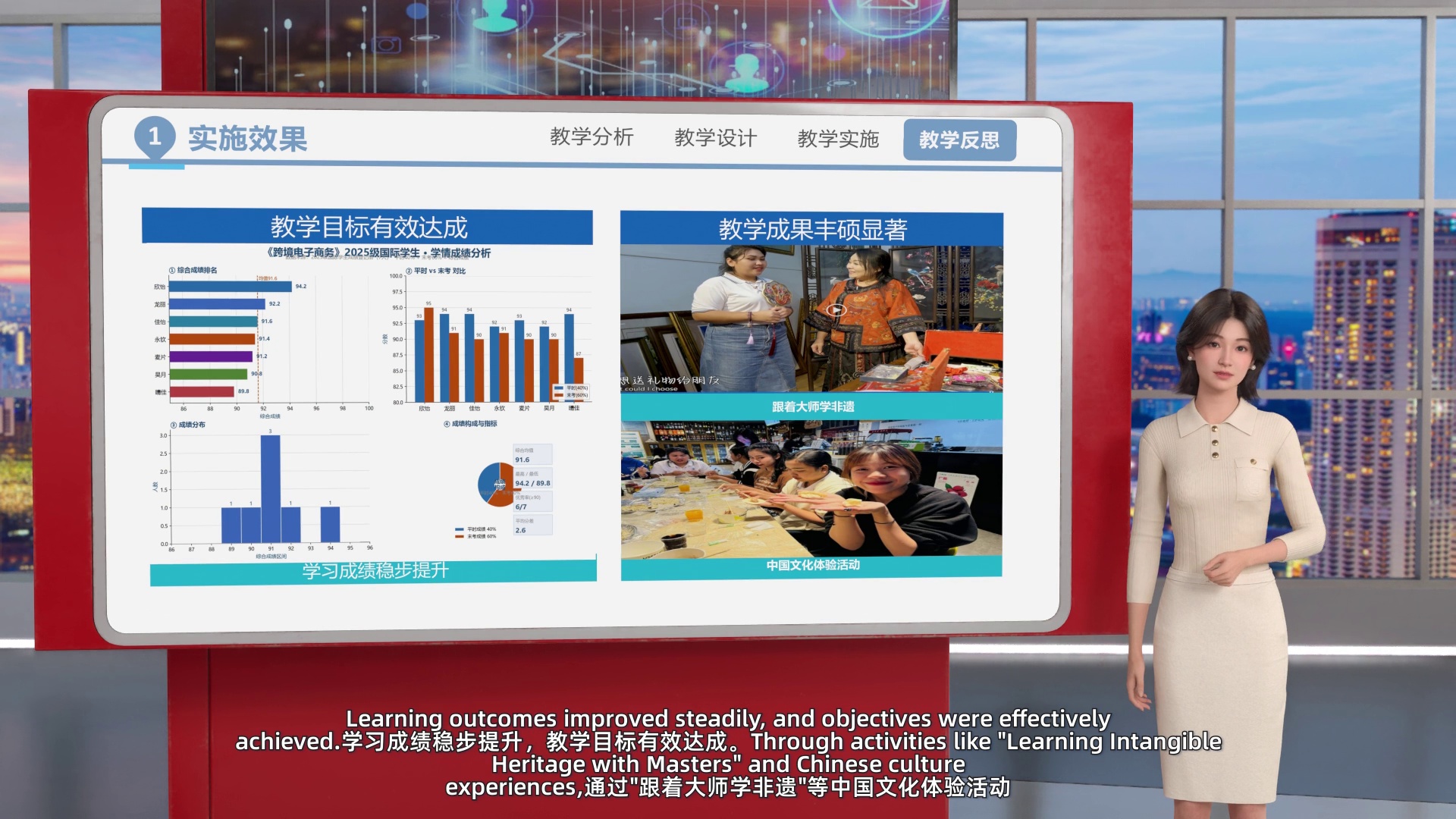
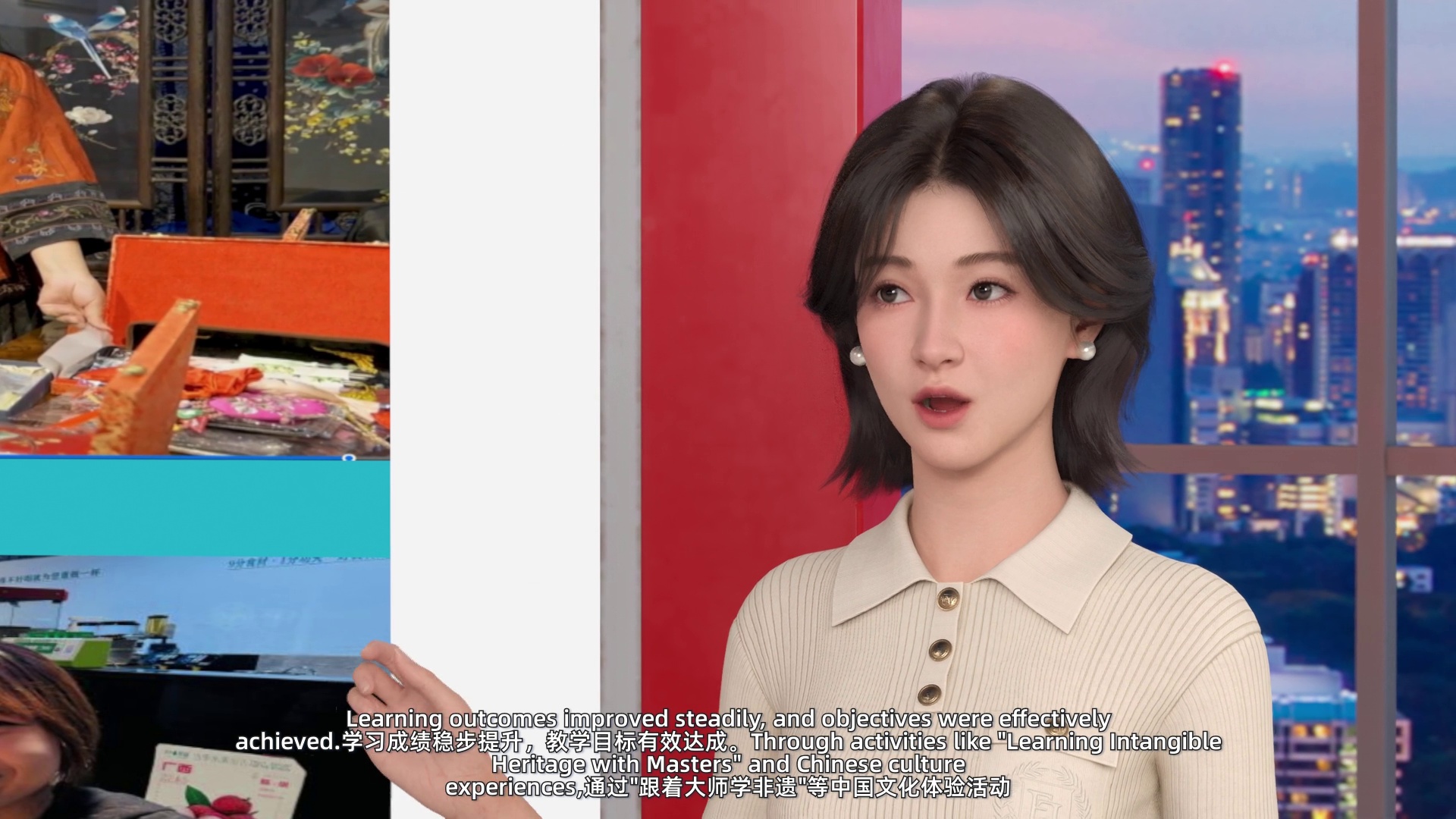
Results are remarkable. Learning outcomes improved steadily, and objectives were effectively achieved. Through activities like "Learning Intangible Heritage with Masters" and Chinese culture experiences, students' cultural understanding rose from fifty to over eighty percent. They also excelled in skills competitions.
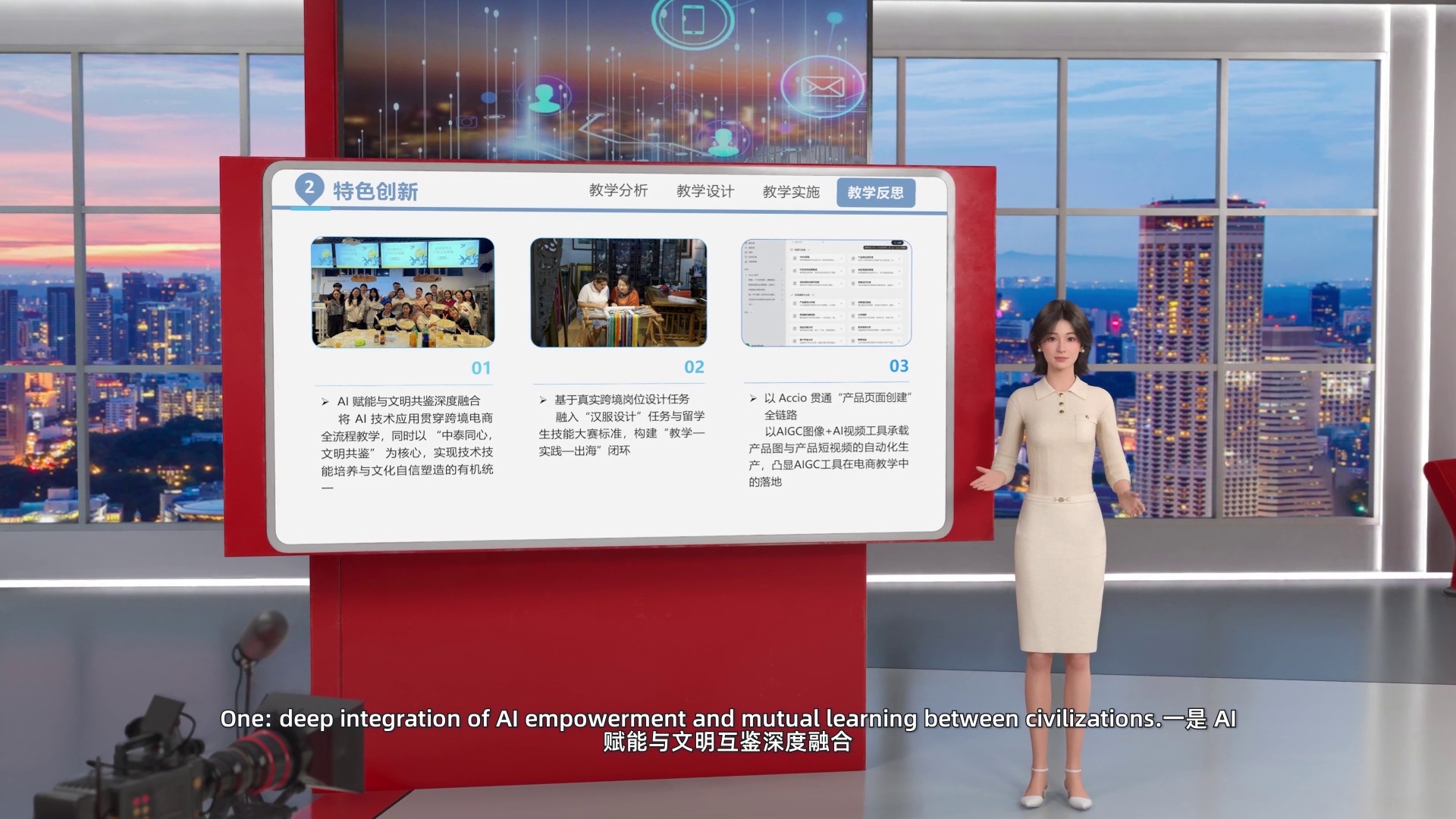
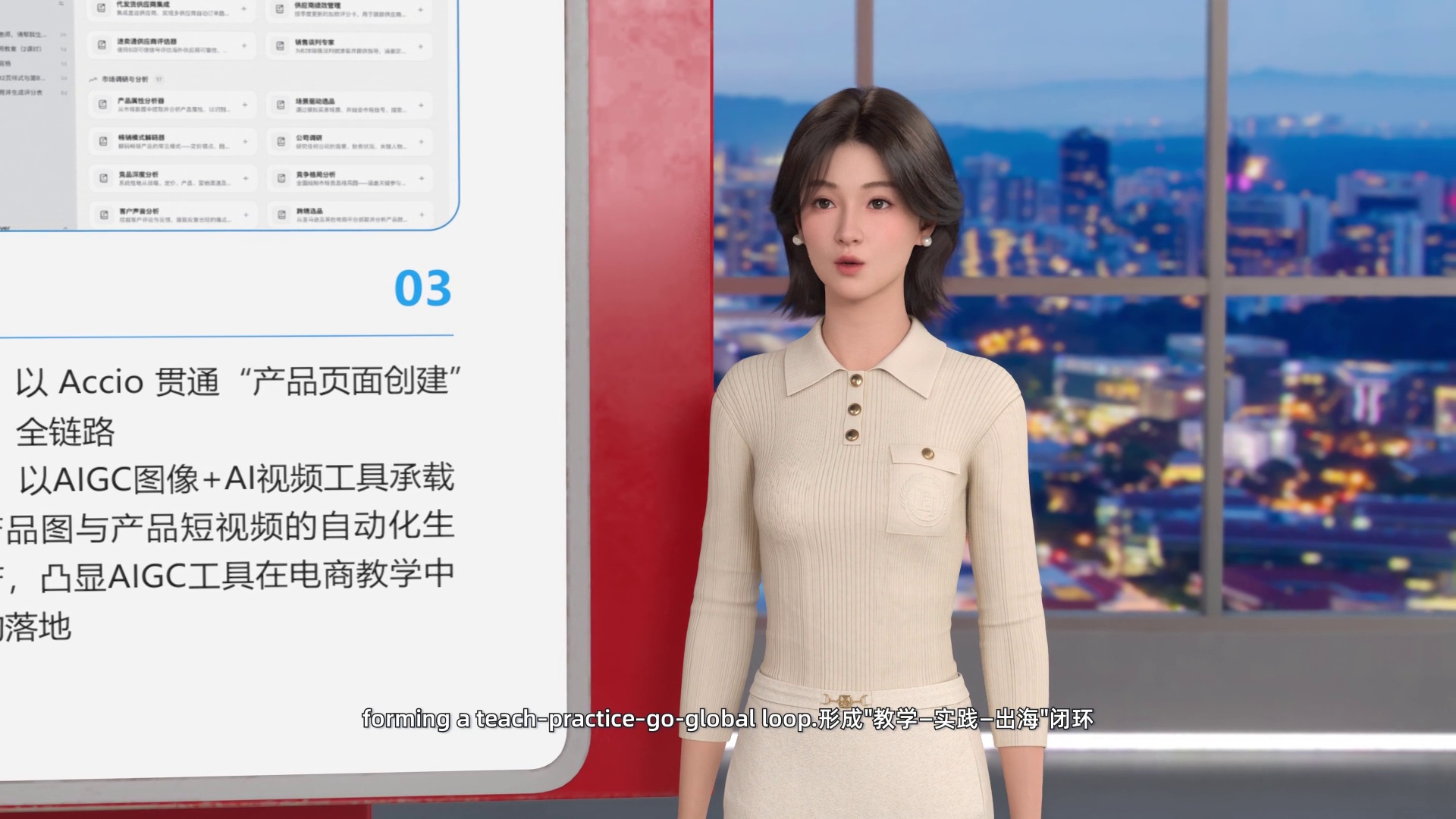
Three innovations stand out. One: deep integration of AI empowerment and mutual learning between civilizations. Two: tasks built from real cross-border jobs, linked to competition standards, forming a teach–practice–go-global loop. Three: Accio enabling the full product-page chain with AIGC images and videos.
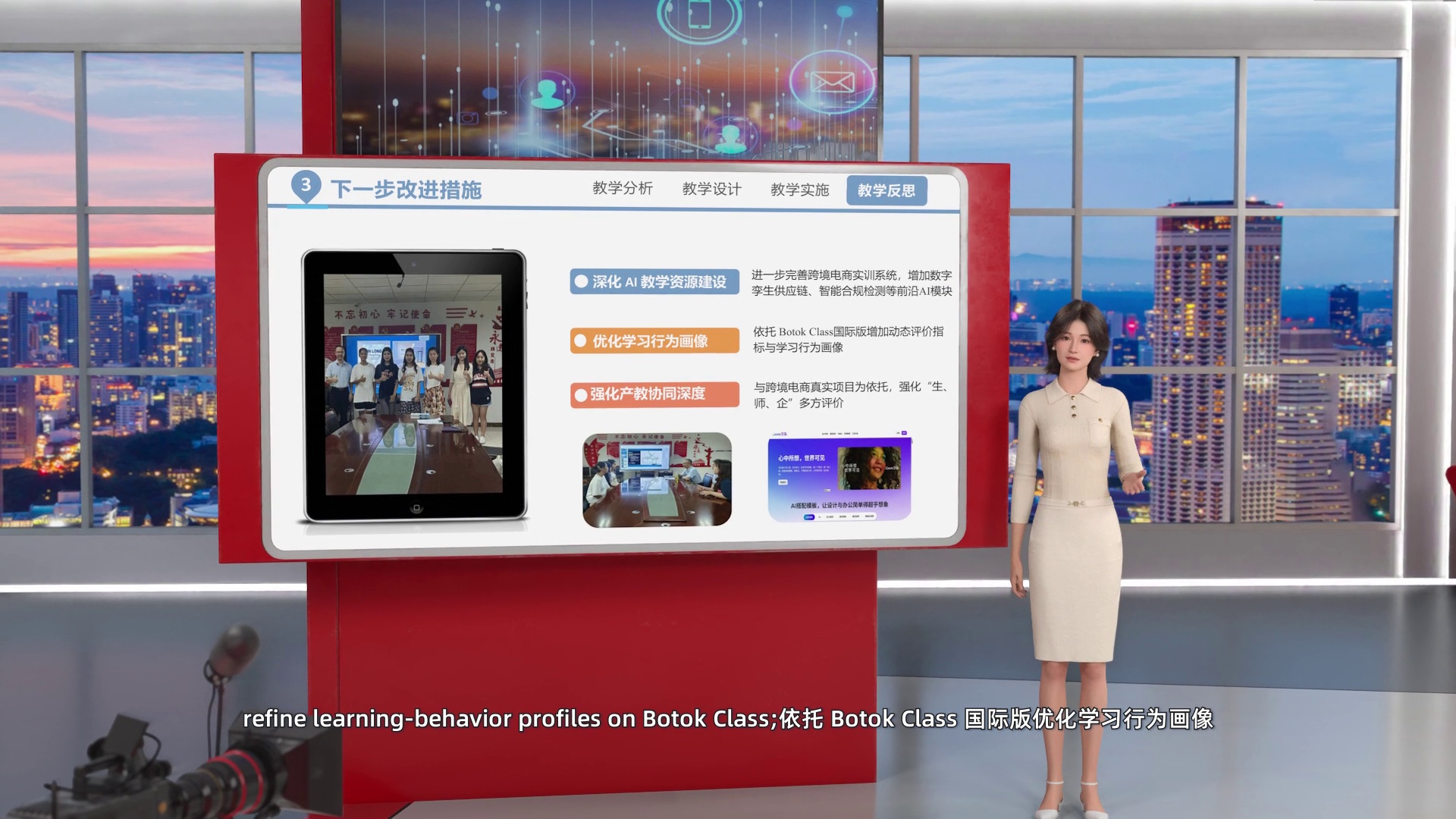
Next steps: deepen AI resources with digital-twin supply chains and smart compliance checks; refine learning-behavior profiles on Botok Class; and strengthen school–enterprise collaboration.
Thank you, judges.
展开